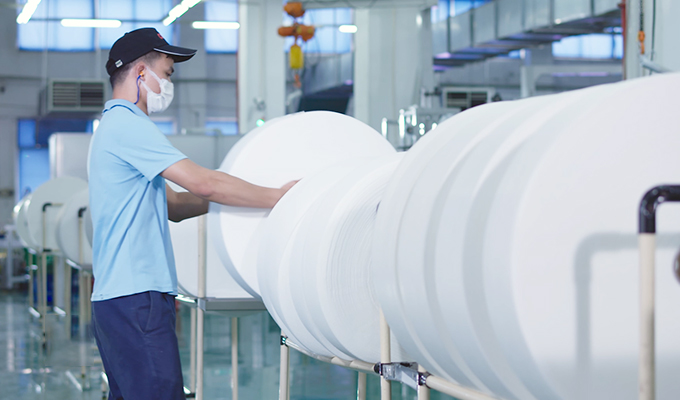
During the hot and humid summer months, the global infant and child care market faces significant challenges regarding product comfort and skin health. For international maternal and infant brands, cross-border e-commerce sellers, and B2B buyers, gaining a deep understanding of how products perform under extreme weather conditions is crucial. The high temperatures and humidity of summer can easily lead to skin issues such as diaper rash and heat rash in infants. Consequently, selecting high-quality, breathable baby diapers to enhance infants’ comfort during the summer has become a core concern for end consumers worldwide. For international maternal and infant brands, staying abreast of technological trends in this niche market not only effectively boosts customer loyalty but also helps build strong brand barriers through supply chain optimization. This article will provide an in-depth analysis of this topic from the perspectives of materials science, skin physiology, and modern manufacturing processes.
The Importance of Choosing Breathable Diapers in Summer
In the field of maternal and infant care, a baby’s skin barrier is not yet fully developed. Compared to adults, infants’ stratum corneum is approximately 30% thinner, meaning their skin is extremely sensitive to environmental irritants, friction, and changes in humidity. This is particularly true in summer, when temperatures exceed 30°C. Because infants’ sweat glands are underdeveloped, they rely primarily on their skin surface to dissipate heat. If they wear diapers with poor breathability for extended periods, the temperature and humidity of the local microclimate can rise rapidly.
According to the authoritative guidelines onthe prevention and care of diaper rash issued by the American Academy of Pediatrics , a persistently damp environment can damage the skin’s natural lipid barrier, making it more susceptible to irritation from ammonia in urine and digestive enzymes in feces, which can lead to severe diaper rash. Therefore, highly breathable baby diapers have become the essential solution to this problem.
Looking at procurement trends in the global B2B market, wholesalers in North America, Europe, and humid regions such as Southeast Asia are significantly adjusting their product portfolios. Consumers are no longer satisfied with basic absorbency alone; instead, they prioritize “breathability” and “skin dryness” as key factors in their purchasing decisions.
For international brands, promoting breathable baby diapers has evolved from a “high-end product selling point” to a “standard requirement” for summer marketing. By offering products with exceptional breathability, brands can directly reduce return rates and customer complaints while building excellent user reviews on Amazon, independent e-commerce sites, or local retail channels.
Material Selection and Manufacturing Processes for High-Performance Breathable Baby Diapers
Achieving exceptional breathability is by no means as simple as “making the product thinner”; rather, it involves an extremely rigorous scientific formulation of diaper materials and precise manufacturing processes. A high-quality breathable baby diaper typically consists of three layers in its structural design: the top layer, the absorbent core, and the bottom layer. The level of breathability depends primarily on the material of the breathable membrane in the bottom layer and the lamination technology used to bond the layers together.
1. Nanoscale Microporous Technology in Core Materials
In the selection of diaper materials, the bottom-layer PE breathable film (Polyethylene Breathable Film) is the technological core. During production, a specific proportion of calcium carbonate (CaCo3) particles is uniformly mixed into high-density polyethylene. After an orientation-stretching process, the polyethylene substrate and the calcium carbonate particles separate, forming hundreds of millions of nanoscale microporous channels.
Substance/Structure
Physical Diameter (microns)
Mechanism of Action
Water vapor molecules
Approx. 0.0004
Far smaller than pore diameter; can freely pass through and rapidly release moisture
Nano-breathable pores
0.1 - 1.0
Allows gas to pass through; completely blocks liquid molecules
Liquid water droplets/urine
100 or more
Far larger than the pore diameter; cannot seep through due to surface tension
High-quality raw material suppliers strictly control the water vapor transmission rate (WVTR) of the base layer, typically requiring summer products to achieve a rate between $2,500 and 4,000 g/m²/24h$ to ensure that heat and moisture are quickly released, thereby maintaining air circulation inside the diaper.
2. How Precision Manufacturing Processes Ensure Breathability
However, even the finest materials will see their final performance significantly compromised without the support of advanced diaper manufacturing processes. In modern diaper manufacturing, three core processes directly impact breathability:
Zero-Adhesive or Linear Hot-Melt Adhesive Laminating Process: Traditional diaper manufacturing relies heavily on hot-melt adhesives to bond layers of material, but large-area adhesive application acts like an airtight “wall,” severely obstructing airflow. Advanced diaper manufacturing employs ultrasonic adhesive-free welding or precise linear adhesive application technology, maximizing the release of the material’s inherent breathable micro-pores.
Ultra-Thin All-Cotton Composite Core Technology: Traditional wood pulp cores tend to clump and fracture after absorbing liquid, resulting in localized high density and airtightness. Modern processes utilize ultra-thin all-cotton composite cores, which evenly lock super absorbent polymer (SAP) between breathable non-woven fabrics. This not only ensures an ultra-thin feel after absorption but also maintains vertical airflow channels, allowing breathable baby diapers to retain excellent breathability even after fully absorbing urine.
Fully Automated High-Speed Tension Control: On high-speed production lines operating at 600 to 800 pieces per minute, even the slightest deviation in tension can cause misalignment of the micro-pores across the layers of material. This demands extremely high precision in diaper manufacturing equipment, which must feature intelligent electronic tension control and automatic web guiding capabilities to ensure perfect alignment of the micro-pores in the top layer, core, and back layer of the finished product.
This is why professional buyers worldwide, when evaluating B2B supply chains, consider a supplier’s diaper manufacturing hardware capabilities—such as whether they use top-tier industry equipment like Italian GDM or Japanese Seiko—as a key criterion for assessing their ability to consistently produce high-quality breathable baby diapers.
3、How B2B Brands and Wholesalers Can Evaluate Suppliers’ Diaper Manufacturing Capabilities and Product Portfolios
For global buyers seeking long-term partnerships, selecting a manufacturer with robust R&D capabilities and comprehensive product coverage is key to mitigating procurement risks and driving business growth. When evaluating suppliers, it is essential to look beyond a single product category and instead conduct a comprehensive assessment of their technical support for summer travel and sleep scenarios across different age groups.
For example, for newborns and infants under one year old, traditional disposable diapers require optimized breathable, elastic waistbands around the lower back and legs to prevent heat rash caused by sweat buildup. For older toddlers who are crawling or walking—who are highly active in the summer and sweat twice as much—the procurement portfolio must extend to high-quality pull-up pants. Pull-up pants require a 360-degree breathable waistband. By applying differentiated tension to multiple elastic bands during manufacturing, they ensure a snug, leak-proof fit while creating countless micro-airflow channels around the waist and abdomen.
Industry Insights:
Leading manufacturers must not only provide basic OEM services but also possess ODM R&D capabilities, enabling them to offer differentiated diaper material solutions tailored to the climatic characteristics of specific target markets (such as the tropical rainforest climate of Southeast Asia versus the tropical desert climate of the Middle East).
High-quality factories establish strategic partnerships with Fortune 500 raw material suppliers (such as Sumitomo Chemical’s SAP and ExxonMobil’s specialty resins). According to research by theMayo Clinicon children’s skin health and environmental irritants, reducing chemical additives and fragrances in materials can significantly lower the likelihood of allergies in infants and toddlers. Chiaus strictly enforces “zero additives, low allergenicity” standards across its core product lines. Combined with exquisite craftsmanship, this provides overseas B2B clients with highly competitive, differentiated selling points, empowering them to stand out in summer marketing campaigns.
Overall, competition in the global maternal and infant market has shifted from a simple “price war” to a “value war” driven by core technology. A breathable baby diaper that truly addresses user pain points during the summer requires top-tier diaper materials and rigorous manufacturing processes. For buyers committed to building international brands, partnering with a super factory like Chiaus—which possesses full-industry-chain advantages—is undoubtedly a wise choice for rapidly entering the high-end summer maternal and infant market and achieving breakthrough sales.
FAQ
Q1: Why is breathability the most critical factor in evaluating the quality of a baby diaper during the summer?
A baby’s skin has a thinner stratum corneum than an adult’s, and their sweat glands are not yet fully developed. During the hot summer months, if a diaper lacks breathability, a “greenhouse effect” of high heat and humidity can form within the diaper’s microenvironment. This not only makes the baby feel stuffy and irritable but also causes the skin’s stratum corneum to become excessively saturated, making it highly susceptible to diaper rash caused by ammonia irritation and bacterial growth. Choosing breathable baby diapers allows billions of micro-pores in the bottom layer to quickly release moist, warm air, keeping the skin dry.
Q2: How do high-quality diaper materials and manufacturing processes work together to determine a diaper’s breathability?
High-quality diaper materials provide a solid physical foundation, such as nano-porous PE films with high WVTR (Water Vapor Transmission Rate) standards and fluffy hot-air nonwoven fabrics. Advanced manufacturing processes, however, determine whether these materials can perform to their full potential. For example, using ultrasonic adhesive-free welding or linear adhesive spraying instead of large-area adhesive coating prevents the adhesive layer from blocking the material’s breathable pores; simultaneously, ultra-thin composite core technology ensures uniform distribution of SAP polymer resin, maintaining good air circulation even after absorption.
Q3: For overseas B2B buyers, what are the different priorities when sourcing baby diapers and baby pull-up pants during the summer?
For baby diapers designed for the static stage (newborn stage), buyers should focus on the flow rate of the absorbent top layer and the breathability of the back leak-proof elastic barrier to prevent sweat buildup on the back; For baby pull-up pants designed for the active stage (toddler stage), summer procurement should prioritize 360° all-around waistband breathability and material weight, ensuring that sweat from the waist, abdomen, and groin can evaporate quickly during intense, sweaty activities, thereby preventing chafing and redness.
Q4: How can the breathability of breathable baby diapers be verified using quantitative metrics?
The internationally recognized core quantitative metric is the Water Vapor Transmission Rate (WVTR), typically measured in $g/m^2/24h$. Generally, the higher the WVTR value, the better the breathability. Qualified summer breathable diapers should have a WVTR of 2000 or higher. Premium products like Chiaus, manufactured using high-end diaper materials and automated production lines, achieve even higher WVTR values in their breathable layers. Before leaving the factory, they undergo humidity decay curve testing in a biomimetic respiration laboratory to ensure that every batch delivered to B2B clients meets the most stringent international testing standards.