You've just brought your baby home, and suddenly every product feels like it could be dangerous. The huge number of choices and worry about hidden chemicals are real. So, are disposable diapers safe? This is a common and fair question. This guide explains diaper materials, shows what to look for, and gives you a clear way to pick a non-toxic brand without guessing. This guide isn't about fear; it's about facts. We'll break down the science so you can feel sure about your choice for your baby's health.
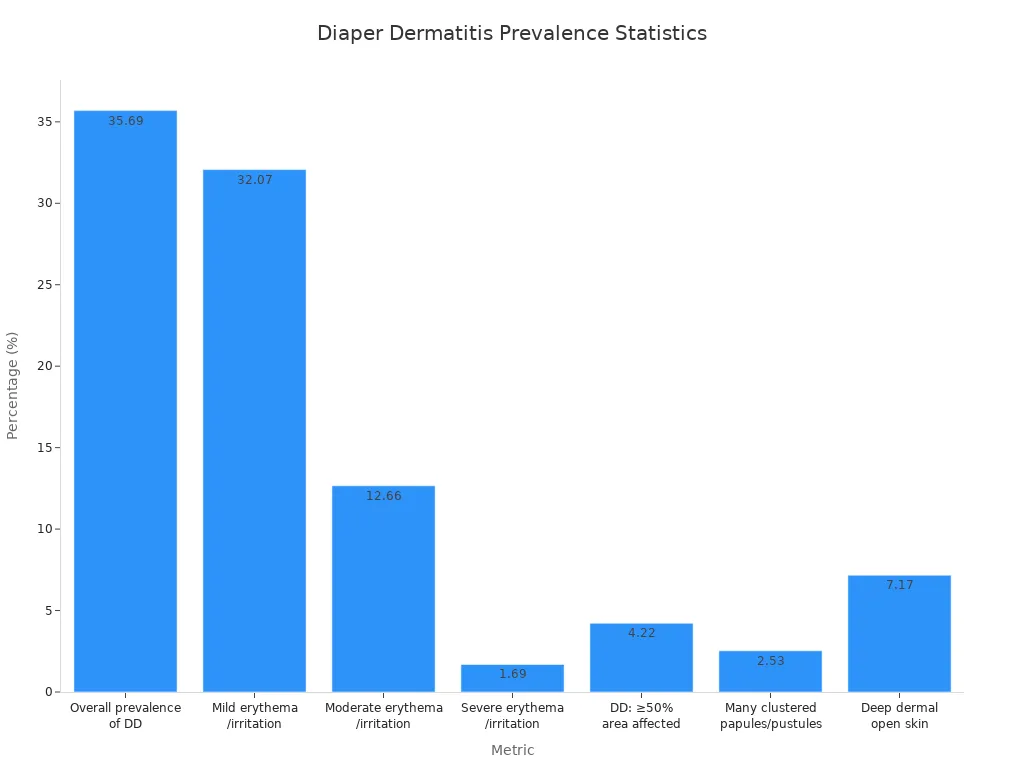
Think about this: diaper rash affects many babies. The table below shows key numbers. Knowing about diaper material safety helps you avoid things that irritate skin.
Metric
Value
Overall prevalence of diaper dermatitis (DD)
35.69% (95% CI: 32.04–39.47)
Mild erythema/irritation among DD cases
32.07%
Moderate erythema/irritation among DD cases
12.66%
Severe erythema/irritation among DD cases
1.69%
DD affecting ≥50% of diaper area
4.22%
Many clustered papules/pustules
2.53%
Deep dermal open skin (severe skin damage)
7.17%
Key Takeaways
Disposable diapers have several layers, and each layer has a special job. When you know the layers, you can check for safety.
Avoid diapers with fragrances, lotions, dyes, and phthalates. These additives can irritate your baby's skin.
Pick chlorine-free diapers to lower your dioxin exposure. Check for TCF or PCF labels.
Look for third-party certifications like OEKO-TEX Standard 100. These show safety by using independent testing.
Be careful of unclear claims like 'natural' or 'eco-friendly.' These words have no legal definition and can mislead you.
Try new diapers on your baby's skin. Look for any redness or irritation after changing brands.
Compare the price of each diaper to find the best deal. Buying in bulk or using a subscription can save money while keeping diapers safe.
Brands that clearly list their ingredients and safety certifications show they care about safety. Pick these brands to feel confident.
The Anatomy of a Disposable Diaper
A disposable diaper looks simple, but it has many layers. Each layer has a special job. Knowing these layers helps you check diaper material safety. Let's look inside a diaper.
The Layers and Their Functions
Modern diapers use a multi-layer design. Brands like Chiaus build each layer for comfort and performance. The layers work together to keep your baby dry. You need to know what each layer does.
The Top Sheet and Its Contact with Skin
The top sheet touches your baby's skin directly. This layer must be soft and gentle. It also needs to let liquid pass through quickly. Chiaus uses a soft, breathable topsheet that moves moisture away from the skin. This lowers wetness on the skin surface. A good top sheet stops the skin from staying wet. Wet skin leads to diaper rash more easily. The top sheet material also affects breathability. Better airflow keeps the skin healthier.
The Absorbent Core and Its Components
Below the top sheet, you find the absorbent core. This layer does the heavy work. It pulls liquid in and locks it away. Chiaus offers two types of cores. One option is ultra-thin. The other uses a wood-pulp composite. Both options keep your baby dry. The core also includes an acquisition and distribution layer. This layer spreads liquid evenly across the diaper. Even distribution helps the core use its full capacity. The core materials decide how much liquid the diaper can hold. A good core stops leaks and keeps the skin dry.
The Back Sheet and Waterproofing
The back sheet is the outer layer. It stops leaks. You want a back sheet that keeps liquid from escaping. You also want it to breathe. Air flow reduces heat and moisture inside the diaper. Many regular diapers use a polyethylene back sheet.
The polyethylene bottom sheet is made from the petroleum product naphtha, derived from crude oil refining.
This means standard back sheets come from crude oil. Some brands now use plant-based materials instead. Chiaus uses breathable materials that allow air flow while stopping leaks. The choice of back sheet material affects both performance and environmental impact.
The "Hidden" Additives in Diapers
Beyond the main layers, many diapers contain extra additives. Makers add these for various reasons. Some additives cause skin reactions. You should know what to look for. Understanding these additives is part of checking diaper material safety.
Fragrances and Lotions
Some diaper brands add fragrance to mask odors. They also add lotions to protect skin. These seem helpful, but they can cause problems. Fragrances often contain phthalates. Phthalates can irritate sensitive skin. Lotions may contain parabens or other preservatives. Your baby's skin absorbs everything it touches. Chiaus diapers stay free from fragrance and phthalates. This lowers the risk of irritation. Choosing fragrance-free diapers is a simple way to protect your baby's skin.
Dyes and Pigments
Dyes give diapers colorful patterns. Many parents like cute designs. However, dyes can cause allergic reactions. Some dyes contain heavy metals. The skin on a baby's bottom is very thin. It absorbs chemicals more easily than adult skin. Unnecessary dyes add risk without benefit. Choosing diapers without dyes makes sense for sensitive babies. Plain white diapers work just as well without the added chemicals.
Why Material Transparency Matters
You cannot check safety without knowing what is inside the diaper. Material transparency means the brand tells you exactly what they use. Some brands hide ingredients behind vague terms like "natural" or "eco-friendly." These terms have no legal definition. You need real information. Chiaus publishes its certifications openly. You can see OEKO-TEX, ISO, and FDA approvals. These certifications require independent testing. They verify that materials meet safety standards. When a brand shares this information, you can trust their products. Transparency gives you the power to choose wisely. Every layer and every additive matters for your baby's health. Now you know what to look for inside a diaper. This knowledge helps you pick the safest option.
Key Chemicals to Avoid in Diapers
You now know what is inside a diaper. The next step is learning which chemicals can hide in those layers. Some substances cause skin irritation. Others pose more serious health risks. Lab tests show that many popular diapers contain small amounts of volatile organic compounds. These chemicals evaporate at room temperature. Your baby's warm skin can make them release faster. Knowing these risks helps you make safer choices for your child.
Chlorine and the Dioxin Problem
Most regular diapers use bleached wood pulp in their absorbent core. The bleaching process creates byproducts called dioxins. These compounds stay in the environment for decades. They also build up in human tissue over time. Dioxin exposure links to developmental problems and immune system disruption. Babies face higher risks because their bodies still grow quickly.
The Bleaching Process Explained
Makers bleach wood pulp to make it white and soft. Early bleaching methods used elemental chlorine gas. This process caused significant dioxin contamination. Modern facilities often use chlorine dioxide instead. This method reduces dioxin formation but does not remove it completely. Totally chlorine-free (TCF) bleaching uses oxygen-based compounds. This approach avoids chlorine entirely. Processed chlorine-free (PCF) bleaching allows recycled materials. Both options reduce dioxin exposure compared to older methods.
Lab testing found chloroform in 67% of baby diapers tested. The highest level reached 12 nanograms per gram. Chloroform forms during chlorine-based bleaching. It also appears as a breakdown product of other chemicals. Benzene appeared in 90% of baby products including diapers. Its highest level measured 11 nanograms per gram. Benzene ranks as a known carcinogen. Even tiny amounts raise concern for repeated exposure.
Health Risks Associated with Dioxins
Dioxins interfere with hormone function. They can affect thyroid activity and reproductive development. The World Health Organization classifies one specific dioxin as a known human carcinogen. Repeated exposure through diaper contact creates a pathway into your baby's system. The skin on a diaper area stays thin and sensitive. It absorbs chemicals more readily than other body parts. Choosing chlorine-free diapers reduces this exposure route significantly.
Phthalates and Synthetic Fragrances
Phthalates represent another chemical category to avoid. These compounds make plastics flexible and durable. They also carry fragrance in many consumer products. Your baby's diaper may contain phthalates in its elastic parts or back sheet. The risk increases when makers add synthetic fragrances to mask odors.
Sources of Phthalates in Plastics
Phthalates enter diaper materials on purpose. Makers add them to soften plastic parts. The leg cuffs and waistband elastic often contain these compounds. A 2025 study tested diapers from 66 infants in China. Researchers found several phthalates in the products. They found a link between one phthalate in diapers and its metabolite in infants' urine. The study estimated that skin absorption from diapers added to infants' overall exposure. This finding confirms that diaper contact delivers measurable amounts of these chemicals.
Aspect
Finding
Primary source
Added to make plastic flexible
Detection
Multiple phthalates found in infant diapers
Exposure route
Skin absorption from direct contact
Regulation
No federal ingredient disclosure requirement
Current rules offer limited protection. No federal law requires diaper makers to list complete ingredients. New York stands as the only state requiring ingredient labeling. A California bill would require disclosure of intentionally added ingredients online and on packaging. However, this bill does not ban phthalates. North Carolina has no similar requirement. You cannot rely on rules alone to protect your baby.
The Impact of Fragrance on Sensitive Skin
Synthetic fragrances often contain phthalates as carriers. The term "fragrance" on an ingredient list can hide dozens of undisclosed chemicals. Your baby's skin reacts to these compounds with redness, itching, or rash. Fragrance-free diapers remove this risk entirely. Chiaus diapers contain no fragrance and no phthalates. This commitment reduces irritation potential for sensitive skin.
Sodium Polyacrylate and Other Absorbents
The absorbent core often contains sodium polyacrylate. This superabsorbent polymer can hold hundreds of times its weight in liquid. It turns urine into a gel-like substance. This keeps moisture away from your baby's skin. The technology works impressively well. However, questions about its safety persist.
How the Gel Works
Sodium polyacrylate consists of long polymer chains. These chains absorb water molecules through osmosis. The polymer swells as it captures liquid. This swelling locks moisture inside the core. Your baby's skin stays dry even after multiple wettings. The gel structure stops liquid from escaping back to the surface. This mechanism explains why modern diapers beat cloth alternatives in dryness.
Potential Irritation and Safety Data
The FDA approved sodium polyacrylate for use in diapers decades ago. Most safety reviews conclude it poses minimal risk when contained within the core. The polymer sits beneath the top sheet. Direct skin contact rarely occurs. However, some babies show sensitivity to the material. If the diaper core tears, the gel can touch skin directly. This exposure may cause irritation in sensitive infants. The 1,4-dioxane found in 58% of baby diapers can form during polymer manufacturing. Its highest level measured 3.6 nanograms per gram. This contaminant appears as a byproduct of certain production methods. Choosing brands with strict quality control reduces this risk. Chiaus tests finished products to ensure safety standards. Their OEKO-TEX certification verifies that materials meet strict limits for harmful substances.
Understanding diaper material safety means knowing what to avoid. You now recognize the key chemicals that cause concern. This knowledge helps you read labels carefully. You can find safer options without falling for marketing claims. Remember that "natural" does not always mean non-toxic. Look for verifiable certifications instead of vague promises. Your baby's health depends on the choices you make today.
Decoding Labels and Certifications
You see words like "hypoallergenic" and "natural" on diaper packages everywhere. These terms sound reassuring. But do they actually mean what you think? The truth might surprise you. Understanding these labels helps you make smarter choices for your baby. Let's break down what these claims really say about diaper material safety.
What "Hypoallergenic" Really Means
The term "hypoallergenic" suggests a product causes fewer allergic reactions. Many parents look for this word when choosing diapers. However, the FDA does not regulate this term for consumer products like diapers. Each manufacturer applies the label based on their own internal criteria. No standardized federal definition exists. This means one brand's "hypoallergenic" might differ from another's.
True allergic reactions to diaper components remain rare. Studies show sensitization rates below 1–2 percent. Most diaper rashes come from irritant contact dermatitis. Friction and moisture cause this condition, not allergies. A diaper labeled "hypoallergenic" typically excludes common allergens. You will find no natural rubber latex or added fragrances in these products. These exclusions help reduce irritation risk. But the label alone does not guarantee safety. You need more evidence than a marketing claim.
Understanding Third-Party Certifications
Independent certifications provide real verification. These organizations test products without bias. They check for harmful substances using strict standards. Look for these certifications when evaluating diapers.
OEKO-TEX Standard 100
OEKO-TEX Standard 100 stands as the global gold standard for textile safety. This certification tests for over 1,000 harmful substances. The list includes formaldehyde, heavy metals, and pesticides. Products receive classification based on their intended use. Diapers fall into Class 1, which covers babies and children up to three years old. Class 1 carries the strictest requirements and limit values. The certification process involves application, verification, testing, and on-site visits. Certificates remain valid for one year. Annual reviews keep the standards current. Chiaus holds this certification, proving their diapers meet these rigorous safety requirements.
Product Class
Target Group
Example Products
Requirement Strictness
Class 1
Babies & children up to 3 years
Diapers
Strictest requirements
Class 2
Direct skin contact
Bed linens
Stricter than Class 3 & 4
Class 3
No direct skin contact
Jackets
Moderate
Class 4
Home textiles & decoration
Curtains
Least strict
USDA Certified Biobased
The USDA Biobased label indicates a product contains plant-based materials. This certification verifies the percentage of renewable biological content. You might see this label on diapers using corn or sugarcane materials. The USDA program provides transparency about renewable content. However, this label does not test for harmful chemicals. A product can contain biobased materials and still include other additives. Use this certification alongside chemical safety testing. It tells you about sustainability, not necessarily about diaper material safety.
The "Chlorine-Free" Label (TCF vs. PCF)
You will see two chlorine-free labels on diaper packages. Totally Chlorine-Free (TCF) means no chlorine compounds were used during bleaching. Processed Chlorine-Free (PCF) allows recycled materials that may have been bleached previously. Both options reduce dioxin exposure compared to older methods. The industry largely moved away from elemental chlorine in the 1980s. Modern methods still use chlorine dioxide in some cases. TCF and PCF labels indicate safer bleaching processes. Look for these labels to minimize dioxin exposure for your baby.
Red Flags and Greenwashing Tactics
Marketing teams know parents want safe products. Some brands exploit this desire with misleading claims. Greenwashing describes this deceptive practice. You can spot these tactics with careful attention.
Vague Claims Like "Natural" or "Eco-Friendly"
The terms "natural" and "eco-friendly" have no legal definition. Any brand can use these words without proof. Laboratory testing of four "eco-friendly" diapers found only one contained any plant-based material. Even that one included non-biodegradable plastics. Polyethylene, polyester, and polypropylene take hundreds of years to decompose. Some brands use earthy packaging colors to create false nature associations. Green packaging makes consumers perceive products as more eco-friendly. Research confirms this visual bias. Some brands even dye diapers brown to appear natural. Do not trust packaging colors or vague terms. Demand specific certifications instead.
The Importance of Full Ingredient Disclosure
Full ingredient disclosure means a brand lists everything inside their product. Few brands do this voluntarily. New York stands as the only state requiring diaper ingredient labeling. Other states have no such requirement. Without disclosure, you cannot verify safety claims. Chiaus publishes its certifications openly. You can verify their OEKO-TEX and ISO approvals. This transparency builds trust. When a brand hides ingredients, ask why. You deserve to know exactly what touches your baby's skin.
Other brands: Often not verified
Certifications provide the verification you need. They replace guesswork with proven standards. Your baby deserves this level of protection.
Understanding Diaper Material Safety
The materials inside a diaper decide how safe it feels on your baby's skin. Looking at different material choices helps you know what matters most for diaper material safety. Here is a closer look at the key parts.
Plant-Based vs. Petroleum-Based Plastics
The Benefits of Corn or Sugarcane-Based Materials
Plant-based plastics come from renewable sources like corn or sugarcane. These materials cut down on fossil fuel use. They may also lower greenhouse gas emissions when made. But you should know an important fact. Bio-based polyethylene has the same structure as petroleum-based polyethylene. It does not break down faster. It does not act differently after disposal. The term "bio-based" only talks about the carbon source. Life cycle studies show tradeoffs. Plant-based plastics use less fossil fuel but shift the burden to farming. Growing crops needs land, water, fertilizers, and pesticides. Many plant-based diapers also mix in fossil-derived polymers. Safety differences between plant-based and petroleum-based plastics are small for chemical exposure. The main differences are in resource use and farming effects.
The Drawbacks of Conventional Polyethylene
Conventional polyethylene comes from naphtha, a product of crude oil refining. This source is not renewable. Petroleum-based plastics stay in the environment for hundreds of years. They do not break down naturally. The making process adds to greenhouse gas emissions. While chemically similar to plant-based options, conventional polyethylene depends fully on fossil fuels. Choosing plant-based materials lowers this dependence but does not fix every environmental problem.
Unbleached vs. Bleached Pulp
The Look and Feel of Unbleached Fibers
Unbleached pulp keeps its natural brown or tan color. The fibers feel softer and more natural against the skin. No chemical bleaching agents touch the material. This removes all risk of dioxin exposure. Some parents like the natural look. Others find the color less appealing. The choice depends on what you care about.
Performance Differences in Absorbency
Bleached pulp may soak up liquid a little faster at first. However, unbleached pulp works well in modern diaper designs. Chiaus offers wood-pulp composite absorbent cores that work effectively. These cores lock in moisture without using harsh bleaching. Totally chlorine-free (TCF) and processed chlorine-free (PCF) options give safer choices. You get good absorbency without the chemical risks.
The Role of Adhesives and Elastic
Solvent-Based vs. Water-Based Glues
Diaper assembly needs adhesives to hold layers together. Solvent-based glues use carrier fluids like toluene, methyl ethyl ketone (MEK), and trichloroethane (TCA). These are volatile organic compounds (VOCs). The Clean Air Act Amendments list them as Hazardous Air Pollutants (HAPs). They are linked to cancer, birth defects, and nerve damage. TCA also harms the ozone layer. The Montreal Protocol led to its phase-out.
Water-based adhesives offer a safer option.
Water-based adhesives are often used to put together disposable hygiene products like diapers, sanitary pads, and medical dressings. Their low VOC content and lack of toxic substances make them a top choice for makers. They give strong bonds while meeting strict safety rules.
These glues create strong bonds without harmful emissions. Choosing diapers with water-based adhesives lowers your baby's exposure to VOCs.
The Safety of Synthetic Rubber
Elastic leg cuffs and waistbands contain synthetic rubber. Some brands use natural rubber latex. Latex can cause allergic reactions in sensitive babies. Chiaus diapers stay free from latex. This lowers the risk of contact dermatitis. Synthetic rubber alternatives give the same stretch and fit without the allergen worries. Your baby gets a secure, comfy seal without extra chemical exposure.
Checklist for Choosing Safe Diapers
You now know the materials and chemicals. The next step is action. This checklist gives you a clear path. Follow these steps to find diapers that protect your baby.
Step 1: Read the Ingredient List Like a Pro
Most diaper packages do not list full ingredients. New York is the only state requiring this disclosure. But you can still find clues. Look for specific terms and certifications. Avoid vague marketing claims.
Key Terms to Avoid
Pediatric dermatologists highlight five ingredients of highest concern.
Ingredient
Source/Function
Health Risk
Super Absorbent Polymer (SAP)
Petroleum-based absorbent core
May contain acrylamide (potential carcinogen) and acrylic acid (skin/eye irritant)
Fragrances
Added to mask odor
Can cause breathing difficulties, asthma, contact dermatitis, and headaches
Dyes
Used for prints; may contain heavy metals
Can cause skin irritation, contact dermatitis, and diaper rash
Phthalates
Added to plastic for elasticity
May harm developing reproductive and endocrine systems
Dioxins
Byproduct of chlorine bleaching
Classified by EPA as among the most toxic chemicals; carcinogenic
Avoid any product listing "fragrance" without specifying ingredients. Avoid "chlorine" or "chlorine bleaching" claims. Skip diapers with lotions or coatings. These additives increase irritation risk without real benefit.
Key Terms to Look For
Look for these positive indicators on the package.
Key Terms to Look For
Why It Matters
Totally Chlorine-Free (TCF)
No dioxin byproducts from bleaching
Fragrance-Free
Truly no added scent chemicals
No Lotions or Coatings
Reduces exposure to potential irritants
Clear Material Sourcing
Plant-based pulp, cotton, or bamboo blends
Verified Certifications
OEKO-TEX Standard 100, EWG Verified, USDA Biobased, Dermatest Excellence Seal
Organic cotton and hemp offer breathable, pesticide-free options. Bamboo works well if not chemically processed. Reliable certifications like GOTS and OEKO-TEX Standard 100 provide independent verification. These labels mean a third party tested the product.
Step 2: Research the Brand's Transparency
A brand's openness tells you a lot. Companies that hide ingredient lists often have something to hide. Transparency builds trust.
Checking for Public Sustainability Reports
Look for sustainability reports on the brand's website. These documents show the company's commitment to safety and environmental impact. Chiaus publishes its certifications openly. You can verify OEKO-TEX, ISO, and FDA approvals. A green factory and renewable energy use also signal genuine commitment. The brand's green factory spans over 100,000 square meters and generates over 2,000,000 KWh of solar energy annually. This level of detail shows a brand that takes safety seriously.
Looking for Direct Customer Communication
Contact the brand directly with questions. A responsible company answers promptly. Ask about their quality control process. Ask about raw material sourcing. Ask about third-party testing. Reliable brands share this information freely. They welcome your questions. They do not hide behind vague statements.
You can also use third-party resources to verify claims. These tools help you cut through marketing noise.
Product Testing: Independent labs test for hundreds of contaminants. They provide unbiased data about product purity.
Certifications: Look for EWG Verified, USDA Organic, B Corp, and Leaping Bunny certifications. These recognize brands that prioritize transparency.
Consumer Education: Resources help you understand labels and make informed choices.
Industry Collaboration: Brands that work with third-party organizations show commitment to cleaner products.
Step 3: Test for Your Baby's Skin Sensitivity
Every baby reacts differently. A diaper that works for one child may irritate another. Testing helps you find the right fit.
The Patch Test Method
Start with a patch test. Place a small piece of the diaper against your baby's inner thigh or arm. Use a clean section of the diaper. Leave it for 15 to 30 minutes. Check the area for redness or irritation. If no reaction appears, the diaper is likely safe for your baby. This simple test prevents full-scale diaper rash.
Monitoring for Rashes or Irritation
After switching to a new diaper brand, watch for changes. Check your baby's skin at every diaper change. Look for redness, bumps, or dry patches. A rash within the first few days signals a reaction. Stop using the new brand immediately. Return to your previous brand. Wait for the skin to heal before trying another new brand.
Keep a log of diaper brands and skin reactions. This record helps you identify patterns. You learn which materials work best for your baby. Diaper material safety is not just about lab tests. It is also about how your baby's unique skin responds. Trust your observations. Your baby's comfort is the most important test.
This checklist gives you a practical framework. You can evaluate any diaper brand with confidence. You know what to look for, what to avoid, and how to test. Your baby's health depends on the choices you make. Every informed choice adds up to safer care.
Top Non-Toxic Diaper Brands to Consider
You want companies that share everything about their products. Full ingredient lists and third-party certifications show real commitment to safety. These brands lead the way in transparency and quality.
Brands with Full Ingredient Disclosure
Some brands go beyond marketing claims. They list every component and prove their claims with independent testing.
Chiaus and Its OEKO-TEX Certified Diapers
Chiaus stands out as a reliable choice for safety-focused parents. The brand holds OEKO-TEX Standard 100 certification. This certification tests for over 1,000 harmful substances. It covers Class 1 products, the strictest category for babies. Chiaus also carries ISO and FDA approvals. The diapers stay free from latex, fragrance, and phthalates. These additives often cause skin irritation. By removing them, Chiaus reduces the risk of diaper rash. The brand operates a green factory spanning over 100,000 square meters. This facility generates over 2,000,000 KWh of solar energy each year. The R&D center covers more than 1,500 square meters. Chiaus holds over 217 patented technologies. These details show a company that invests in both safety and sustainability. When you choose Chiaus, you get a product backed by real testing.
Bambo Nature and Its TCF Commitment
Bambo Nature uses Totally Chlorine-Free (TCF) bleaching. This process avoids chlorine compounds entirely. It prevents dioxin formation during the pulping stage. The brand also carries the OEKO-TEX Standard 100 certification. Bambo Nature diapers remain free from fragrances and lotions. These choices matter for babies with sensitive skin. The brand prioritizes eco-friendly materials and production methods. You can trust that Bambo Nature has taken steps to reduce chemical exposure. TCF bleaching also protects the environment by reducing toxic runoff. This dual benefit makes Bambo Nature a strong option for eco-conscious parents.
Budget-Friendly Non-Toxic Options
Safety does not always mean high cost. Several brands offer certified diapers at reasonable prices.
Dyper as a Mid-Range Choice
Dyper provides an OEKO-TEX certified option at a mid-range price point. The diapers use viscose from bamboo for the inner lining. This material feels soft against your baby's skin. The brand also offers a compostable option for environmentally conscious families. Dyper avoids chlorine, fragrances, and lotions. The combination of certification and reasonable pricing makes Dyper a solid choice for many parents. The compostable program reduces waste after use. This feature appeals to families trying to lower their environmental footprint.
Eco by Naty for Subscription Savings
Eco by Naty focuses on plant-based materials and simple ingredients. The brand offers subscription services that lower the cost per diaper. By subscribing, you save money while getting a consistent supply. The diapers use chlorine-free pulp and avoid synthetic fragrances. This makes them suitable for babies with sensitive skin. Subscription models also mean you never run out of diapers. The savings add up over time, making Eco by Naty a budget-friendly option. You can adjust delivery frequency based on your baby's growth and changing needs.
How to Compare Prices Without Sacrificing Safety
You can find safe diapers without overspending. The key is comparing the right numbers.
Cost Per Diaper Analysis
The easiest way to compare prices is by calculating the cost per diaper. Divide the total package price by the number of diapers inside. This gives you a standard number to compare across brands. A package of 40 diapers for $12 equals $0.30 per diaper. A package of 30 diapers for $10 equals $0.33 per diaper. The larger package often costs less per unit. Track these numbers to find the best value.
Considering Bulk Buying and Subscriptions
Buying in bulk reduces the cost per diaper significantly. Many brands offer discounts for larger quantities. Subscription services also provide regular savings. You set a delivery schedule and the brand sends diapers automatically. This saves you both money and time. Some subscriptions offer 10-20% off regular prices. Look for free shipping options too. These extras lower the overall cost. Always compare the per-diaper price with and without subscription. This ensures you get the best deal without sacrificing safety.
Knowing what diapers are made of is the first step. The real win is knowing you can make choices. No diaper is perfect. Smart choices lower risk a lot. You cut down on dioxins, phthalates, and other bad chemicals. You protect your baby's soft skin. This knowledge turns worry into sure action.
You don't have to be perfect to be a good parent. Every small choice you make for your baby's health matters. Each time you read a label, you feel more sure. Each time you check a certification, you build trust. These small steps become lasting habits. Your baby gains from your careful care.
Share your stories or questions in the comments. Come back for more guides on baby product safety. You are not alone in this journey. Together, we make better choices for our kids.
FAQ
What does OEKO-TEX Standard 100 certification mean for diapers?
This certification checks for over 1,000 harmful substances. Baby diapers fall into Class 1, which has the strictest safety limits. You can trust that certified products meet tough global standards.
How often should you change your baby's diaper?
Change your baby's diaper every two to three hours. Also change it right after a bowel movement. Frequent changes keep wetness away from the skin and lower the risk of diaper rash.
Can you trust a diaper labeled "hypoallergenic"?
The word "hypoallergenic" has no legal meaning. Any brand can use it without proof. Look for third-party certifications like OEKO-TEX instead. These give real proof of safety.
What should you do if your baby gets a rash from a new diaper?
Stop using the new diaper brand right away. Switch back to your previous brand. Let your baby's skin heal fully before trying another new brand. Watch for redness or irritation at each change.
Are plant-based diapers safer than regular ones?
Plant-based diapers cut down on fossil fuel use. They have similar chemical safety to petroleum-based options. The main difference is in resource use and farming effects. Always check for certifications no matter the base material.
What does "chlorine-free" mean on a diaper label?
Totally Chlorine-Free (TCF) means no chlorine compounds were used during bleaching. Processed Chlorine-Free (PCF) allows recycled materials that may have been bleached before. Both labels mean lower dioxin exposure for your baby.