You might ask if teething and diaper rash always happen together. Teething does not directly cause diaper rash. But you may see both at the same time. When babies are teething, they drool more. They may also have looser stools. This extra wetness and stool change can bother your baby's kin. About one out of three babies gets some diaper area irritation. Severe diaper rash happens in about 6% of babies.
Condition | Percentage of Infants |
Any diaper area skin irritation | About 33% |
Severe diaper dermatitis | About 6% |
Some nurses think teething causes diaper rash. But most experts say the link is not direct. You can help your baby with some extra care and attention.
Key Takeaways
Teething does not cause diaper rash directly. Extra drooling and loose stools can make your baby's skin sore. This can raise the chance of getting a rash.
Change diapers often to keep skin dry. Use thick zinc oxide or petroleum jelly to protect the skin from diaper rash.
Give your baby time without a diaper every day. Use super-absorbent diapers to help keep skin healthy and free from rashes.
Look for bad rash signs like open sores or red skin that spreads. Watch for high fever too. Call your doctor if you see these signs.
Trust yourself and be gentle with your baby. Most diaper rashes go away fast with good cleaning and care.
Teething and Diaper Rash
When your baby is teething, you may see some changes. Every baby goes through teething in their own way. Some signs are more common than others.
Teething Baby Symptoms
Your baby might drool a lot more than before. Their clothes can get wet from all the drool. Sometimes, this causes a rash near the mouth or chin.
Your baby’s gums may look red or swollen. You might see a small white spot where a tooth will come in.
Irritability or Fussiness
Teething can make babies cranky. They may cry more and be hard to calm down.
Chewing or Biting on Objects
Babies like to chew on toys or fingers when teething. This helps their gums feel better.
Teething can make it hard for babies to sleep. They might wake up a lot or not fall asleep easily.
Mild Increase in Temperature
Some babies get a slight fever while teething. The fever usually stays under 102°F. If the fever is higher, call your doctor.
Tip: Not every baby has all these signs. Some babies do not have many problems with teething.
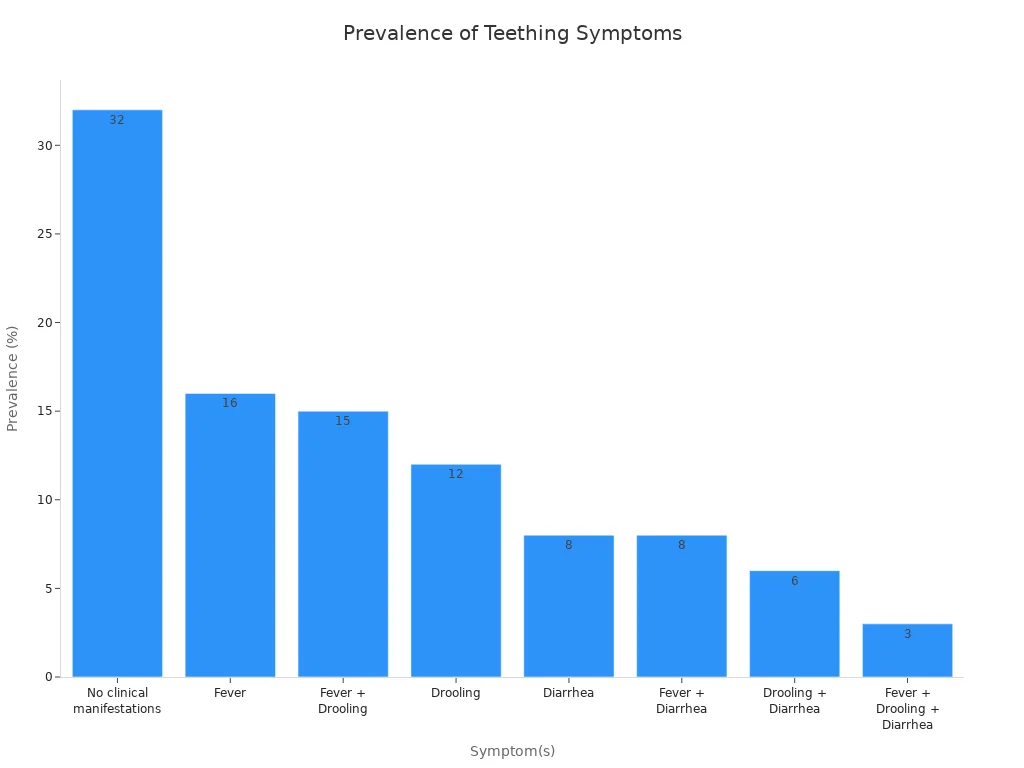
Here is a table showing how often these symptoms happen:
Symptom(s) | Prevalence (%) | Notes |
Fever | 16 | Fever alone; also combined with other symptoms |
Drooling | 12 | Drooling alone; irritation and redness of gums explained as cause |
Diarrhea | 8 | Diarrhea alone; higher prevalence in boys noted |
Fever + Drooling | 15 | Combination of fever and drooling |
Fever + Diarrhea | 8 | Combination of fever and diarrhea |
Drooling + Diarrhea | 6 | Combination of drooling and diarrhea |
Fever + Drooling + Diarrhea | 3 | Combination of all three symptoms |
No clinical manifestations | 32 | Percentage of children without symptoms |
You may hear about classic teething signs, but not all babies get them. Most teething symptoms show up between 4 and 24 months old.
Diaper Rash Signs
Diaper rash can happen when your baby is teething. But teething and diaper rash do not always happen together. Look for these signs:
Redness and Inflammation in the Diaper Area
The skin under the diaper may look red and sore.
Small bumps or blisters can show up. These look scary but are usually not serious.
Tenderness or Discomfort During Diaper Changes
Your baby may cry or wiggle during diaper changes. The rash can make them uncomfortable.
The skin may look dry or start to peel.
Increased Fussiness When Diaper Area Is Touched
Babies with diaper rash may get upset when you clean the area.
Many parents see diaper rash when their baby is teething. Both teething and diaper rash are common. You can handle them with care.
Connection Between Teething and Diaper Rash
Indirect Relationship
You might think teething and diaper rash are always linked. Most experts, like the American Academy of Pediatrics, say this is not true. Teething does not directly cause diaper rash. Sometimes, both happen at the same time. But one does not make the other happen. The real link comes from things that happen during teething, not from teething itself.
Overlapping Timing and Parental Observations
Many parents see diaper rash when their baby drools more or chews toys. This makes it seem like teething and diaper rash always go together. Both can happen around the same age, which can be confusing. Babies sometimes chew on toys with germs. This can upset their stomach and cause diarrhea. Diarrhea can make diaper rash worse.
Role of Immune System Changes
During teething, your baby's immune system changes. Babies lose some protection from their mother. This makes it easier for them to catch germs that cause diarrhea. When babies have diarrhea, they are more likely to get diaper rash.
Drooling and Stool Changes
Increased Saliva Production
Teething causes babies to make more saliva. Babies swallow more drool. This can make their stools looser and happen more often.
Saliva-Induced Skin Irritation
Extra drool can bother the skin. It can cause problems around the mouth and in the diaper area. Wet skin breaks down faster. This makes it easier for diaper rash to start.
Changes in Stool Consistency
Loose or watery stools are common when babies swallow more drool. These stools can be rough on your baby's skin.
Diarrhea and Prolonged Moisture Exposure
Diarrhea is a big risk for diaper rash. If your baby’s skin stays wet with stool or urine, a rash is more likely. Studies show babies with diarrhea get more severe diaper rash.
Severity of Diaper Dermatitis | Number of Infants | Percentage (%) |
Very mild | 37 | 63.8 |
Mild | 18 | 31.0 |
Mild to moderate | 3 | 5.2 |
Note: If your baby's rash looks strange or lasts a long time, talk to your doctor. Not all rashes come from teething or drool.
Doctors say diaper rash is not a normal sign of teething. Many things can cause diaper rash, like yeast, bacteria, or allergies. If you think every rash is from teething, you might miss another problem. Always ask your pediatrician if you are not sure.
Diaper Rash Prevention
Taking care of your baby's skin can be hard. It gets even harder when teething happens. You can stop diaper rash by using good habits and the right products.
Keeping Skin Dry
Change Diapers Promptly After Wetting or Soiling
Change diapers right after they get wet or dirty. This is the best way to stop diaper rash. Doctors say to check diapers every hour if your baby has diarrhea or a rash. At night, try to check at least one time.
Allow Air Time Between Diaper Changes
Let your baby’s skin get some air. Give your baby a few minutes without a diaper after each change. Air drying helps keep the skin dry and lowers diaper rash risk.
Use Super-Absorbent Diapers
Pick super-absorbent diapers for your baby. These diapers pull wetness away from the skin. Studies show babies get less diaper rash with these diapers than with cloth or regular ones.
Gently Pat Skin Dry Instead of Rubbing
After cleaning, pat your baby’s skin dry. Do not rub the skin. Rubbing can hurt the skin and make diaper rash worse.
Tip: Using super-absorbent diapers and giving air time helps keep skin dry and healthy.
Barrier Creams
Apply a Thick Layer of Zinc Oxide or Petroleum Jelly
Barrier creams protect skin from wetness and things that can hurt it. Zinc oxide and petroleum jelly are the best choices. Studies show creams with both work best for treating diaper rash and keeping skin healthy.
Choose Fragrance-Free and Hypoallergenic Products
Pick creams and diapers with no smell and that are hypoallergenic. These lower the chance of skin problems and allergies. They are gentle and help stop diaper rash.
Reapply Cream at Every Diaper Change
Put on a thick layer of barrier cream every time you change a diaper. Do not rub it in. Let it sit on the skin like a shield.
Avoid Overuse of Powders or Talc
Do not use talc-based powders. They can cause breathing problems if your baby breathes them in. If you use powder, pick cornstarch-based ones and use only a little.
Diaper Changes
Increase Frequency During Teething or Diarrhea
Change diapers more often during teething or if your baby has diarrhea. Wetness and loose stools can make diaper rash worse.
Use Lukewarm Water and Mild, Fragrance-Free Wipes
Clean the diaper area with lukewarm water and soft, fragrance-free wipes. Do not use wipes with alcohol or strong smells.
Monitor for Signs of Diarrhea or Unusual Stool
Watch for changes in your baby’s stool. If you see diarrhea, change diapers more and keep the area very clean.
Dispose of Soiled Diapers Properly to Prevent Irritation
Throw away dirty diapers right away. This keeps the area clean and lowers the chance of skin problems.
If you do these things, you can stop diaper rash and keep your baby happy, even when teething. If you are not sure how to treat diaper rash, ask your doctor for help.
When to See a Doctor
1.Severe Diaper Rash
Signs of Severe or Persistent Rash
You might wonder when a diaper rash needs more than home care. Some signs show you should call your doctor. Look for these warning signals:
Rash that lasts more than three days, even after you keep the area clean and dry
Rash that gets worse or spreads to places like the scalp or behind the ears
Bright red rash with swelling or red spots at the edges
Rash that resists treatment or keeps coming back
If you see any of these, your baby may need medical help.
Open Sores, Bleeding, or Oozing
Sometimes, diaper rash can turn into open sores or blisters. You may notice bleeding or pus-filled spots. These signs mean the skin is very irritated. Your doctor can help with special creams or ointments.
Rash Spreading Beyond Diaper Area
A rash that moves past the diaper area, like onto the arms, face, or scalp, is a reason to get help. This could mean an infection or another skin problem.
No Improvement After Several Days of Home Care
If you try home remedies for a few days and the diaper rash does not get better, it is time to call your pediatrician. The doctor may suggest new treatments, like antifungal or antibiotic creams. Never use over-the-counter creams without asking your doctor first.
Signs of Pain or Extreme Discomfort
If your baby seems very uncomfortable, cries a lot, or cannot sleep, do not wait. Painful diaper rash needs quick attention.
If you see blisters, bleeding, or pus, or if your baby has severe pain, reach out to your healthcare provider right away.
2. High Fever
Fever Above 102°F (38.9°C)
Teething may cause a slight rise in temperature, but a true fever is not normal. If your baby’s temperature goes above 102°F, this could mean an infection.
Fever Lasting More Than 24 Hours
A fever that sticks around for more than a day is a sign to call your doctor. Teething fevers are usually mild and short.
Accompanied by Lethargy or Unresponsiveness
If your baby seems very sleepy, hard to wake, or does not respond as usual, get medical help. These symptoms are not part of teething.
Signs of Dehydration (e.g., dry mouth, no tears, reduced urination)
Watch for dehydration if your baby has diaper rash and fever. Signs include:
Dehydration can get serious fast, so call your doctor if you notice these signs.
If your baby will not eat or drink, this can make dehydration worse. Babies need fluids to heal and stay healthy.
Warning Sign | What You Should Do |
Open sores or bleeding | Call your doctor |
Rash spreading beyond diaper | Seek medical advice |
High fever | Contact your pediatrician |
Signs of dehydration | Get help right away |
No improvement after 3 days | Schedule a check-up |
Remember, most diaper rash cases are mild. Severe symptoms, high fever, or dehydration are not typical of teething. These signs may point to another illness that needs a doctor’s care.
Teething does not directly cause diaper rash, but extra drool and changes in stool can make it more likely. You can help your baby stay comfortable with a few simple steps:
Watch for signs like drooling, gum swelling, and fussiness.
Check your baby’s skin at every diaper change for redness or irritation.
Change diapers often and use gentle wipes.
Apply a thick layer of zinc oxide cream to protect the skin.
Give your baby diaper-free time each day.
Most diaper rashes clear up with good care. If you notice a rash that gets worse or does not heal, talk to your doctor. You know your baby best—trust your instincts and keep them comfortable!
FAQ
1.Can teething cause diarrhea in my baby?
You might notice looser stools when your baby is teething. Doctors say teething does not directly cause diarrhea. Swallowing extra drool can change stool texture, but true diarrhea often comes from illness or diet changes.
2.How long does diaper rash usually last?
Most diaper rashes clear up in two to three days with good care. If you keep your baby’s skin clean and dry, you help speed up healing. If the rash sticks around longer, reach out to your doctor.
Tip: Give your baby diaper-free time each day to help skin heal faster.
3.Should I change my baby’s diaper more often during teething?
Yes, you should check and change diapers more often when your baby is teething. Extra drool and loose stools can make diaper rash more likely. Frequent changes keep skin dry and comfortable.
4.What cream works best for diaper rash?
Zinc oxide cream or petroleum jelly works best for most diaper rashes. You want a thick layer to protect your baby’s skin. Choose fragrance-free and hypoallergenic products for gentle care.
Cream Type | Good For Sensitive Skin? | Fragrance-Free? |
Zinc Oxide | ✅ | ✅ |
Petroleum Jelly | ✅ | ✅ |