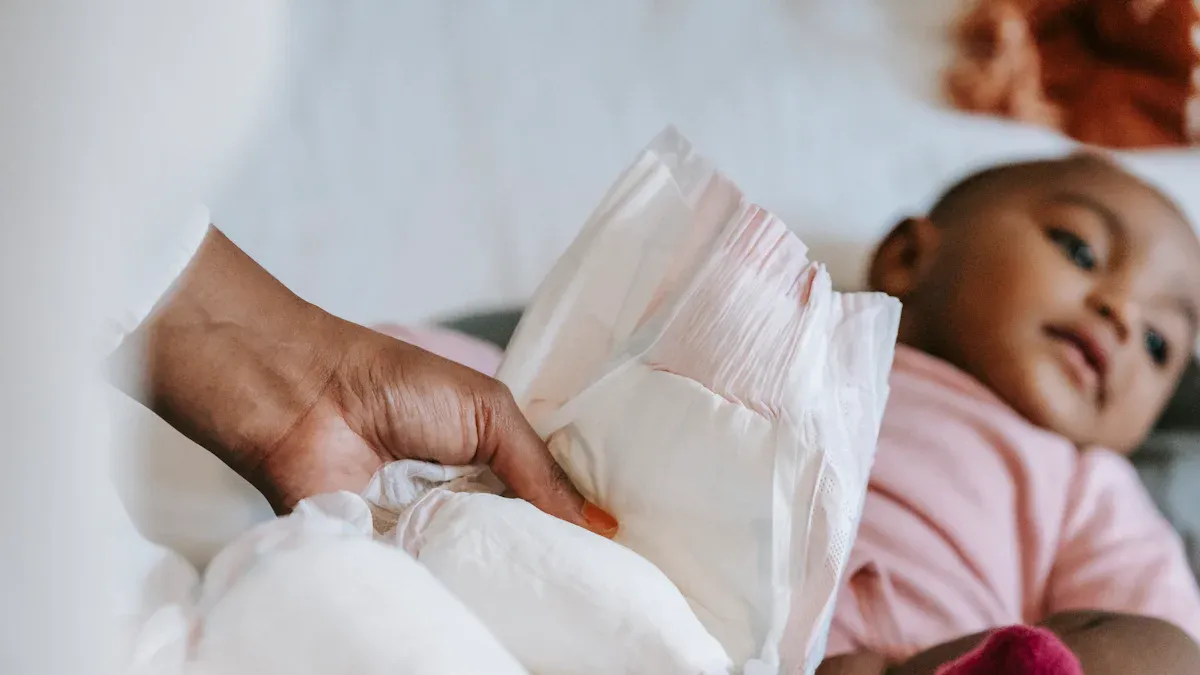
When comparing taped diapers vs diaper pants, you want the best option for your baby. Many parents choose diaper pants because they are easier to change, especially if your baby is very active. On the other hand, taped diapers are still preferred for newborns since they fit snugly and help prevent leaks. You might be concerned about comfort, skin irritation, or ease of use. Modern diapers feature advanced cores and soft materials that keep your baby dry and comfortable. It’s a good idea to try both taped diapers vs diaper pants to find out which works best for your family.
Key Takeaways
Taped Diapers vs Diaper Pants
What Are Taped Diapers?
Taped diapers are a common pick for many families. They have sticky tape tabs on both sides. You can make them tighter or looser around your baby. Taped diapers are good for newborns and babies who need many changes. You lay your baby down to put them on and use the tapes to close them. This lets you choose how tight the diaper is. Many parents like taped diapers because they fit well and stop leaks. You can use them for babies of many ages and sizes.
What Are Diaper Pants?
Diaper pants look like normal underwear. You pull them up and down like pants. They use an elastic waistband, not tape tabs. They are easy to put on, even if your baby moves a lot. Diaper pants are best for older babies and toddlers who crawl or walk. You can change them fast, even if your baby will not lie down. Many parents pick diaper pants because they are easy and comfy for active play.
Key Differences
You might ask what makes taped diapers and diaper pants different. Experts say there are a few main things that set them apart. Here is a simple table to help you see the differences:
Feature | Taped Diapers | Diaper Pants |
Design | Sticky tape tabs let you close and adjust | Elastic waistband, you pull them on like pants |
Fixing Method | Tape tabs keep the diaper closed | Elastic waistband keeps the diaper in place |
Convenience | You can adjust the fit, good for many changes | Fast and easy to change, great for busy babies |
Applicable Age | Good for newborns and toddlers, fits many sizes | Best for older babies and toddlers who move a lot |
Parental Preference | Some parents like the classic fit and control | Others like how easy and quick they are to use |
Structural Features | Absorbent core with soft fabric layers | Absorbent core with stretchy parts for movement |
You can see that taped diapers and diaper pants have different good points. Taped diapers are best for newborns and babies who need soft, safe diapers. Diaper pants are better for older babies and toddlers who move a lot and need quick changes. You might use taped diapers at night or for naps, and diaper pants during the day when your baby is active. Many families try both to find what works best for them and their baby.
Pros and Cons: Taped Diapers
Taped Diapers: Pros
If you pick taped diapers, you get many good things. Parents trust these diapers because they keep babies dry and comfy. Here are some main pros:
You can make the diaper tight with sticky tabs. This helps stop leaks and keeps your baby comfy.
Taped diapers have layers that soak up wetness. The special core locks in moisture and protects your baby's skin.
The soft outside lets air move through. This lowers the chance of diaper rash and keeps skin healthy.
Many brands have taped diapers in lots of sizes and styles. You can find ones for boys or girls as your baby grows.
Some diapers have wetness signs, stretchy waists, and soft cuffs. These features add comfort and keep your baby safe.
You can open and close the tapes to check or fix the diaper. This makes changing fast and easy for little babies.
Some taped diapers use earth-friendly materials. This gives you a greener choice for your family.
Taped diapers often soak up more and stop leaks better than diaper pants. They work well at night or for long naps.
Tip: If you want fewer leaks at night, pick tape diapers marked "overnight" or "extra absorbent." These help your baby sleep longer and stay comfy.
Taped Diapers: Cons
Taped diapers have many good points, but there are some downsides too. Some parents see problems when their baby gets more active. Here is a table with common cons and what they mean:
Cons | Explanation |
Bulkiness | Taped diapers can be thick. This might make it hard for babies to crawl or walk. |
Risk of Leaks | If you do not close the tapes right, leaks can happen. This is more likely when your baby moves a lot. |
Less Comfort | Some babies think tape diapers are not as comfy as diaper pants. This is true when they play a lot. |
You may need a flat spot or table to change taped diapers. If your baby kicks or rolls, changing can be hard. Many parents say it is tough to keep a wiggly baby still for a taped diaper change. If your baby moves a lot, you might like diaper pants for quicker changes.
Think about the pros and cons to see if taped diapers are right for your baby and your day. Many families use both types at different times to find what works best.
Pros and Cons: Diaper Pants
Diaper Pants: Pros
Diaper pants have many good points for daily care. They work well for babies who crawl and walk. You can pull them on and off fast. This saves time when you change your baby. The waistband and leg holes stretch to fit your baby. Your baby can move and play without feeling tight.
Changes are quick and easy, even with a moving baby.
The stretchy waistband and soft fabric help stop skin problems and keep your baby comfy.
Diaper pants help with potty training. Your child can pull them up and down alone. This helps them feel proud and learn new skills.
The waterproof outside stops leaks but lets air in. This lowers the chance of diaper rash.
Some pants diapers can be washed and used again. This saves money and helps the planet.
Diaper pants let your baby move and grow strong. They can wiggle, stand, and learn new things.
Pull-up diapers help your child feel like a "big kid." This makes switching to underwear easier.
Tip: If your baby wants to use the potty, diaper pants can help both of you.
Experts say training pants are good between diapers and underwear. The soft feel and stretchy waistband are like real underwear. This helps your child get ready for the next step. The absorbent core stops leaks, so you do not worry about accidents. Experts say you should praise your child and use training pants to help them notice when they are wet.
Here is a table with the main pros of diaper pants for babies:
Pros of Diaper Pants for Babies | Description |
Easy to pull on/off | Quick changes, even with active babies |
Snug, flexible fit | Elastic waistband adapts to movement |
Comfort and breathability | Soft materials reduce irritation and keep skin healthy |
Potty training support | Children can pull pants diapers up/down independently |
Leak protection | Waterproof layer prevents leaks, reduces rash risk |
Eco-friendly options | Some diaper pants are reusable and machine-washable |
Promotes movement and development | Unrestricted movement helps muscle growth and coordination |
Diaper Pants: Cons
Diaper pants have some problems too. Parents sometimes see leaks and fit issues. This happens if the pants diapers do not fit your baby’s body shape. Diaper pants can cost more than taped diapers. You may need to try different brands to find the best one. The waistband and leg holes do not adjust much. This can cause gaps and leaks if the diaper is too loose or tight.
Leaks happen if diaper pants do not fit well at the legs or waist. If your baby sits in a car seat or wears tight clothes, leaks can happen.
Fit problems come from babies having different body shapes. Some pants diapers do not fit every baby, so leaks may not stop.
Absorbency problems show up if the diaper gets too wet or inserts are not in the right spot. You may need to change diapers more often to stop leaks.
Clothes can press on diaper pants. Tight pants or onesies can squeeze the diaper and cause leaks.
Diaper pants often cost more than taped diapers. This is true for fancy or reusable types.
You cannot change the fit as much as with taped diapers.
⚠️ Note: You can stop leaks by picking diaper pants with double elastic leg cuffs, stretchy waistbands, and better absorbency. Make sure clothes are loose and let air in to stop leaks from squeezing.
Here is a table with the main cons of diaper pants:
Cons of Diaper Pants for Babies | Description |
Potential for leaks | Gaps at legs or waist, compression leaks from tight clothing |
Higher cost | Premium and reusable options may be more expensive |
Less adjustable fit | Waistband and leg openings cannot be customized as much as taped diapers |
Fit issues | Standard designs may not suit every baby's body shape |
Absorbency problems | Saturated diapers leak; frequent changes needed |
Clothing interference | Tight clothes compress diaper, causing leaks |
You may need to try many brands and sizes to find the best diaper pants for babies. Always check the fit and pick loose clothes to help stop leaks. Knowing the pros and cons of pants diapers helps you choose what is best for your baby and your family.
Age and Activity Suitability
Newborns and Infants
Recommended Diaper Type
When you care for a newborn, you want a diaper that fits well. The American Academy of Pediatrics does not say one diaper is best. You can pick cloth or disposable diapers for your baby. Both types help keep your baby’s skin healthy and comfortable.
Cloth diapers are soft and let skin breathe, but you must wash them often.
Disposable diapers are easy to use and keep babies dry. They are good for busy days or when you travel.
Why Taped Diapers Work Best
Taped diapers are usually best for newborns and infants. You can use sticky tabs to make the diaper fit better. This helps stop leaks and keeps your baby’s skin safe. Taped diapers are easy to open and close for quick changes. You do not need to take off all your baby’s clothes. This is helpful when your baby does not move much.
Tip: Taped diapers let you adjust the fit. This is important for small babies who need gentle care.
When to Consider Switching
As your baby grows and moves more, changing diapers gets harder. Experts say to try diaper pants when your child starts crawling or walking. Diaper pants make changes faster and easier for you and your baby.
Crawlers and Toddlers
Recommended Diaper Type
For crawlers and toddlers, diaper pants are often better. You pull them up like underwear. You can change your baby quickly, even if they do not want to lie down.
Benefits of Diaper Pants for Active Babies
Diaper pants help active babies move easily. They have soft, stretchy waistbands that fit well but gently. You can change your baby while they stand. This makes diaper changes less of a struggle. Diaper pants use materials that let air in and help stop rashes.
Diaper pants make standing changes quick.
The pull-up style helps your baby feel independent.
They are light, so your baby feels more comfortable.
Transition Tips
You can help your child switch to diaper pants by doing these things:
Cheer your child on and make it fun.
Practice putting on and taking off diaper pants together.
Keep diaper pants with your child’s clothes to get them excited.
Use pants with wetness signs to help your child learn about dryness.
Try not to go back to taped diapers after you start using pants.
Praise your child for good changes and potty tries.
Potty Training
Role of Diaper Pants in Potty Training
Diaper pants are important for potty training. Your child can pull them up and down alone. This helps your child feel proud and independent. The design helps your child feel like a “big kid” and makes switching to underwear easier.
Transitioning from Diapers to Underwear
You can use diaper pants before moving to underwear. Ask your child to try the potty and give rewards for progress. Use fewer diapers as your child learns and feels more confident.
Absorbency and Leak Protection
Taped Diapers
Absorbency Features
You want diapers that keep your baby dry. Taped diapers have special cores that hold a lot of liquid. These cores trap wetness for a long time. Many brands use superabsorbent materials and layers. These help the core soak up liquid fast and spread it out. This stops one spot from getting too wet. The padding stays in place between the topsheet and backsheet. This keeps the diaper from bunching or tearing. Your baby stays dry even after many wettings.
Leak Protection Mechanisms
Taped diapers are good at stopping leaks. They have leak barriers that work if your baby sits, lies down, or moves. The tapes are strong and can be used again. You can adjust them for a better fit. Leak guards and elastic cuffs make a tight seal at the legs and waist. The cuffs use special material to stop leaks. The plastic backsheet and leak guards make the diaper strong. Moisture channels and wicking layers keep the top dry after each wetting.
Leak barriers stop leaks in any position.
Absorbent padding holds wetness before it leaks.
Leak guards and elastics help the diaper fit well.
Good tapes let you fasten and adjust the diaper.
Tips for Overnight Use and Heavy Wetters
For nighttime or heavy wetters, pick taped diapers marked “overnight” or “extra absorbent.” These have stronger cores and more layers to soak up more. Always check the fit at the waist and legs to stop leaks. Wetness signs and breathable covers help you know when to change. They also keep your baby’s skin healthy.
Diaper Pants
Absorbency Features
Diaper pants have cores that pull wetness away from your baby’s skin. Many brands use two-layer cores and absorbent channels. These spread liquid through the diaper and keep it thin. Some pants use new tech like Dreamshield pockets and Climaflex cores. These can give up to 12 hours of leak protection. They keep your baby comfy and dry.
Leak Protection Mechanisms
Diaper pants are made to stop leaks for active babies. They have stretchy waistbands all around and double leak guards at the legs. Some use blowout barriers for extra help. These features keep the diaper snug and stop leaks when your baby moves. Leak guards and elastic cuffs seal the legs and waist. Some brands add extra cuffs for more protection. Diaper pants now work as well as many taped diapers.
Feature/Aspect | Diaper Pants | Taped Diapers |
Absorbency | Good for light/moderate wetting; up to 12 hrs | High absorbency; better for heavy wetters |
Leak Protection | Leak guards, 360° waistband, new tech | Leak guards, tapes, elastic cuffs |
Overnight Suitability | Best for single overnight wetting | Suitable for moderate overnight wetting |
Tips for Overnight Use and Heavy Wetters
For nighttime or heavy wetters, choose diaper pants made for night. Make sure you pick the right size for a snug fit. Some parents use booster pads for more absorbency. Check that these do not push out the leak guards. Look for pants with wetness signs and sides that tear for easy changes. New features like thin absorbent layers and odor control help keep your baby dry all night.
Tip: Always check the fit and change diapers when they feel heavy. This helps stop leaks and keeps your baby’s skin healthy.
Comfort and Fit: Diapers
Fit: Taped Diapers
When you use taped diapers, you can adjust the fit around your baby’s waist and legs. This helps you get a good fit, which is important for both comfort and leak protection. You place your baby on a flat surface and use the sticky tabs to close the diaper. Some diapers have two tapes, while others have four. The number of tapes can change how snug the diaper feels. Many parents like hook-and-loop tapes because you can readjust them without losing stickiness. Sticky tapes may lose their grip if you move them too much.
You may notice some common fit issues with taped diapers:
Sizing can be different between brands. Sometimes diapers are too big or too small, which leads to leaks or red marks.
Tapes that touch your baby’s skin can cause discomfort or even irritation.
Diapers with extra layers or stuffers can feel thick. This might make it hard for your baby to move or sit comfortably.
Plastic-backed diapers are less breathable and may cause chafing.
Leak guards sometimes need to be adjusted after you open a new diaper.
You should always check the fit after putting on a diaper. Make sure the tapes are secure but not too tight. A well-fitted diaper keeps your baby dry and happy.
Tip: If your baby seems uncomfortable, try a different brand or adjust the tapes for better comfort.
Fit: Diaper Pants
Diaper pants use a stretchy waistband and leg openings. You pull them up like underwear, which makes changes quick and easy. This style works well for active babies who do not want to lie still. The elastic waistband gives a snug fit, but you cannot adjust it as much as taped diapers. If the diaper pants are too loose or too tight, your baby may have leaks or red marks.
You may find that diaper pants feel softer and lighter. The stretchy material moves with your baby, which adds to their comfort. Some babies prefer this style because it feels more like real underwear. However, sizing can still be tricky. Not all brands fit the same, so you might need to try a few before you find the best one for your baby.
A good fit in diaper pants means the waistband sits gently on your baby’s tummy and the leg holes do not gap. This helps prevent leaks and keeps your baby comfortable during play.
Note: Always check for red marks or gaps after putting on diaper pants. This helps you spot fit problems early and keep your baby happy.
Changing and Convenience
Changing: Taped Diapers
When you use taped diapers, you must lay your baby down. This works best for newborns or babies who do not move much. You can make the diaper fit better with the tapes. This helps stop leaks. At home, you might use a changing table or mat. This makes changing easier. But when your baby gets active, changing is harder. Babies wiggle, arch, or crawl away. This makes it tough to close the tapes. You may need toys or songs to keep your baby still.
Taped diapers are not as easy when you are out. You need a flat spot and space to lay your baby down. Sticky tapes are hard to handle with a moving baby. This is tricky in public restrooms or cars. Clothes that are hard to take off make it worse. Many parents say taped diapers soak up more. This is good for overnight. But they are not always easy for fast changes outside.
Tip: Bring a small toy or snack to distract your baby during diaper changes, especially when you are out.
Changing: Diaper Pants
Diaper pants are made for easy use and quick changes. You pull them up or down like underwear. You do not have to lay your baby down every time. This lets you change diapers while your baby stands. It is easier if your baby does not want to lie still. Many diaper pants have sides that tear open. You can take them off fast if there is a mess.
When you are out, diaper pants save time. You do not need to undress your baby all the way. You do not deal with sticky tapes. This is why many parents like diaper pants for trips or outings. But dirty diapers still mean your baby must lie down. This can be hard with a busy child. You may need to use toys or ask someone to help.
Feature | Taped Diapers | Diaper Pants |
Best for | Newborns, less active babies | Active babies, toddlers |
Changing position | Lying down | Standing or lying down |
On-the-go convenience | Less convenient | More convenient |
Quick changes | Sometimes difficult | Much easier |
Note: Try singing or use easy clothes to make diaper changes smoother with any diaper type.
Choosing the Right Diaper
Family Lifestyle
Your daily habits matter when picking a diaper. If you travel a lot, diaper pants are easy to use. You can pull them on and off fast. This helps if your child moves around a lot. Taped diapers are good if you stay home more. You can make them fit just right. The table below shows how each diaper matches different needs:
Factor | Taped Diapers | Diaper Pants |
Suitable Age | Newborns to less mobile infants | Active toddlers and babies on the move |
Absorbency | High absorbency, good for heavy wetting/overnight | Moderate absorbency, suitable for lighter wetting |
Potty Training | Less ideal, traditional diaper style may confuse toddlers | Designed to aid potty training, mimics underwear |
Skin Sensitivity | Better for sensitive skin due to breathable materials | May cause irritation due to snug fit |
Convenience/Ease of Use | Adjustable fit but more time-consuming to change | Quick to put on/off, convenient for travel |
Bulkiness | Bulkier, may restrict clothing choices | Less bulky, allows freedom of movement |
Size Options | Wide range of sizes | Limited size options |
Checking Soiling | Easy to check without full removal | Difficult to check without removal |
Travel Convenience | Less convenient due to bulk and changing time | More convenient, compact and easy to carry |
Tip: Think about your family’s day and where you change diapers. This helps you pick the best diaper for your life.
Baby’s Needs
Your baby’s growth changes which diaper is best. Taped diapers work well for newborns and babies who do not move much. You can adjust the fit and keep their skin safe. When your baby starts crawling or walking, diaper pants are better. These pants use soft, airy fabrics. Some have aloe vera or vitamin E to help skin. The stretchy waistband lets your baby move and feel free. The table below shows how each diaper fits different stages:
Aspect | Taped Diapers | Diaper Pants (Training Pants) |
Suitability for Mobility | Better for less mobile or still babies | Designed for active babies |
Fit Adjustability | Adjustable fit with tabs | Fixed size with elastic waist and legs |
Range of Motion | More restrictive around legs | Less restrictive, supports freedom of movement |
Independence Support | Baby cannot change diaper themselves | Baby can start to change diaper pants themselves |
Diaper Changing Routine | Requires baby to be laid down | Can be changed while baby moves |
Developmental Stage Alignment | Suitable for younger infants | Better for crawling, walking, or potty training |
Comfort Features | Standard absorbency and comfort | Often includes breathable fabrics and skin-soothing ingredients |
Note: Look for signs your baby wants to do things alone, like standing up or wanting to use the potty.
Trying Both Types
You might want to try both diaper styles before you choose. Many parents say this helps a lot. Testing both lets you see what works for your family. You can compare how comfy, absorbent, and easy each diaper is. You also see which one is better for night or travel. Trying both stops you from buying diapers that do not fit your needs.
You find out which diaper is best for your family.
You can check comfort, absorbency, and how easy they are.
You save money by not buying diapers that do not work.
You help your baby stay healthy and keep your routine smooth.
Tip: Buy small packs of each diaper type first. This makes it easy to switch if you need to.
When you pick taped diapers or diaper pants, you think about what is good and bad for your family. Your choice can change how comfy your baby feels and how healthy their skin stays. The diaper you use also makes changing easier or harder, especially when your baby starts moving more. There is not one diaper that works for everyone. You can use both types to find the best one. Each baby is different. You can write your thoughts or questions in the comments below!
FAQ
What is the main difference between taped diapers and diaper pants?
Taped diapers use sticky tabs for closure. Diaper pants have a stretchy waistband and pull on like underwear. You can adjust taped diapers more, while diaper pants are easier for quick changes.
When should you switch from taped diapers to diaper pants?
You should switch when your baby starts crawling or walking. Diaper pants make changes easier with active babies. You can also use them during potty training for more independence.
Can you use diaper pants overnight?
Yes, you can use diaper pants overnight. Choose ones labeled for nighttime or heavy wetting. Always check the fit and absorbency to prevent leaks while your baby sleeps.
How do you prevent leaks with both diaper types?
Make sure you pick the right size. Adjust taped diapers snugly. For diaper pants, check the waistband and leg cuffs. Change diapers often, especially after heavy wetting.
Are diaper pants better for potty training?
Diaper pants help with potty training. Your child can pull them up and down alone. This builds confidence and helps your child learn to use the toilet.