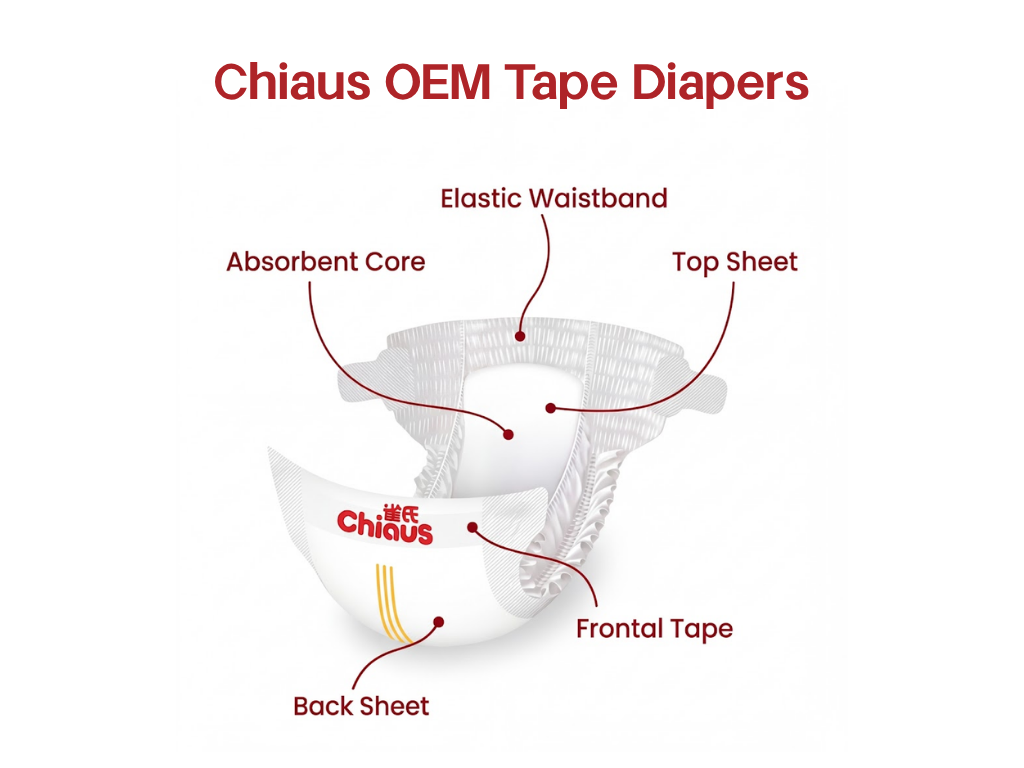
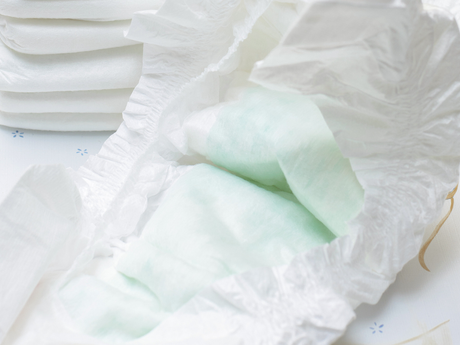
With the global hygiene products market experiencing steady growth, finding high-quality private label diaper partners has become a core strategy for many international importers and retailers. As consumers demand greater product differentiation and brand loyalty, choosing custom diaper services not only helps businesses stand out in a highly competitive market but also maximizes profits through precise market positioning. As an industry leader with more than 20 years of experience, Chiaus understands that, in the global trade environment, grasping the operational logic of OEM diapers is the key to success.
I. Insights into the Global Diaper Market: Why Is Now the Best Time to Enter the Private Label Diaper Market?
According to the latest data fromStatista, the global baby diaper market is projected to maintain a compound annual growth rate of approximately 4–5% over the next few years. Particularly in emerging markets such as Southeast Asia, Africa, and Latin America, the demographic dividend and accelerating urbanization are directly driving demand for disposable hygiene products.
1. Shifting Consumer Behavior
Modern parents—especially Gen Z—no longer blindly follow international luxury brands. They place greater emphasis on a product’s actual ingredients, eco-friendly attributes, and value for money. This trend has created significant opportunities for private-label diapers. Retailers can tailor products to meet the specific preferences of local consumers, such as the need for breathability in hot climates or demand for eco-friendly products.
2. Maturation of the Supply Chain
With advances in manufacturing technology, today’s OEM diapers can meet or even exceed the quality standards of top international brands. By partnering with factories like Chiaus that possess in-house R&D capabilities, importers can easily source high-end baby diapers featuring patented technologies—such as multi-layer instant-absorption cores—thereby building a competitive moat for their brands.
3. Optimized Profit Margins
Compared to distributing established brands, the profit margins for custom diapers are typically 20%–35% higher. By eliminating brand premiums, OEM diaper manufacturers can allocate more capital to marketing their own brands and developing local distribution channels.
II. From Core to Periphery: How to Define High-Quality Custom Diapers?
In international trade, product quality is the most tangible manifestation of “expertise.” To create a successful custom diaper, one must go beyond simply changing the packaging; it requires in-depth customization of raw materials and structural design.
1. Innovation in Core Structure
The core is the “heart” of a diaper. For retailers aiming to build a long-term brand, when selecting an OEM diaper solution, they should prioritize hybrid core or full-core technology.
Absorbency (SAP content): Ensure a balance between superabsorbent polymer (SAP) and fluff pulp to prevent layering and clumping;
Full-core/Pure Wood Pulp Core/Hybrid Core: Select based on market preferences; for example, hot regions typically opt for full-core designs, which are more breathable and less stuffy (ultra-thin core variants), while European and American markets usually choose wood pulp or hybrid core variants (wood pulp cores typically diffuse moisture faster);
Instant Absorption and Dryness: High-quality baby pull-up pants should feature a rapid drainage layer to keep the surface dry for extended periods, reducing the risk of crying and diaper rash caused by skin discomfort.
2. Customized Material Selection
Backing Film and Top Layer: For the high-end market, ultra-fine denier hot-air nonwoven fabrics (e.g., 0.6 denier, 0.8 denier) can be selected to provide a cotton-like feel; For the mass market, a balance must be struck between softness and cost.
Top Sheet Embossing Design: The market now offers a variety of embossed patterns, such as diamond, floral, star, and dot designs, which make the top sheet appear more breathable and also accelerate urine absorption;
Eco-friendly trends: An increasing number of importers require private label diapers to contain biodegradable components or be certified under the OEKO-TEX® standard, which has become a key requirement for entering the European market.
3. Visual and Specification Design
The appeal of custom diapers lies in their unique customizability, which includes:
Unique waist fastener designs (such as large loop fasteners or S-shaped fasteners);
Printed patterns that align with the brand’s aesthetic (front waist tabs, illustrated patches, outer packaging);
Customized product sizes for different markets (NB–6XL);
Customization of various sales and shipping packaging specifications, including trial packs, small, medium, and large packages.
III. Finding a Reliable OEM Diaper Partner: A Guide for Importers to Avoid Pitfalls
For overseas importers, the selection of a factory directly determines the success or failure of a project. When searching for a private-label diaper manufacturer, you should focus on the following key factors:
1. R&D and Innovation Capabilities
A qualified OEM diaper factory should not merely “follow blueprints” but should possess the ability to provide solutions. For example, Chiaus holds over 217 product patents and can offer targeted improvement suggestions based on regional humidity levels and variations in baby body types.
2. Rigorous Quality Management Systems
In the hygiene products industry, safety is an absolute red line. Ensure your partner complies with the ISO 9001 quality management system and holds CE/FDA certifications. These authoritative certifications are not only essential for customs clearance but also serve as a testament to your brand’s credibility.
3. Supply Chain Flexibility and Minimum Order Quantity (MOQ)
Many startup retailers face cash flow pressures when venturing into custom diapers. A reliable partner should offer flexible MOQs and maintain stable raw material reserves to mitigate fluctuations in ocean freight logistics.
4. Transparent Communication and Logistics Support
Information asymmetry in international trade often leads to delays. Choosing private-label diaper suppliers with professional international trade teams that offer one-stop services—from design and prototyping to customs clearance and shipping—can save you significant time and costs.
Conclusion
From factory to home, the journey for private-label diapers may be long, but it is full of opportunities. By partnering with OEM diaper manufacturers (such as Chiaus) that possess deep technical expertise and an international perspective, you can focus your efforts on market insights and brand building.
Whether you’re seeking high-performance baby pull-up pants or looking to build a complete line of custom diapers, understanding market trends, strictly controlling product quality, and maintaining a long-term SEO strategy are essential steps to success in the global maternal and infant market.
If you’re looking for a global partner, visit our official website for more industry insights and customized solutions.
FAQ
Q1: What is the typical minimum order quantity (MOQ) for OEM diaper projects?
A: The MOQ for OEM diapers depends on several factors, including the uniqueness of the raw materials, the printing specifications of the packaging film, and the production line’s scheduling. Generally, the MOQ for a single specification is approximately one 40-foot high-cube (40HQ) container. For partners entering the private label diaper market for the first time, Chiaus offers a flexible, tiered support program to help you smoothly launch your brand while managing inventory risks.
Q2: How can I ensure the quality compliance of my private label diapers in overseas markets?
A: Quality compliance is the cornerstone of international trade. Before launching a private label diaper project, you need to confirm that the factory holds relevant international certifications, such as ISO 9001 and CE certification. Additionally, we can provide corresponding laboratory test reports based on the specific requirements of your target market (e.g., FDA certification for the U.S. or SONCAP certification for Africa) to ensure your baby diapers meet all local regulatory standards when they go on sale.
Q3: How long does it take to customize a batch of diapers, from design to delivery?
A: The entire process is typically divided into three stages:
Design and Confirmation (1–2 weeks): Includes packaging artwork design, confirmation of pattern fees, and final sample review.
Production Phase (3–4 weeks): The first OEM diaper order takes slightly longer due to pattern-making; subsequent reorders are typically completed within 2–3 weeks.
Ocean Freight Logistics (3–6 weeks): Depends on the distance to your port. By working closely with our efficient team, we can significantly streamline the initial design phase, ensuring your custom diapers reach the market as quickly as possible.