Against the backdrop of sustained growth in the global hygiene products market, an increasing number of brand owners, wholesalers, and retail channels are seeking stable and efficient partners for sanitary napkin manufacturing. Particularly in emerging markets such as Southeast Asia, the Middle East, Africa, and Latin America, consumer demands for product quality and brand differentiation are rapidly rising.
For buyers, selecting a sanitary napkin OEM factory with genuine large-scale production capabilities is no longer merely a matter of comparing prices. Production efficiency, supply chain stability, automation levels, quality control capabilities, and the speed of new product development all directly impact a brand’s market competitiveness.
According to market research data from Grand View Research, the global feminine hygiene products market continues to grow steadily, with rising demand particularly for premium, eco-friendly, and personalized products. This implies that future sanitary napkin suppliers must not only be capable of “manufacturing” but also possess “high efficiency, high stability, and strong collaborative capabilities.”
So, how should international buyers or individual brand creators evaluate the production efficiency of a sanitary napkin OEM factory? This article will provide an in-depth analysis of several key evaluation dimensions from an international market perspective to help brands establish more stable and long-term supply chain systems.
Why Is Production Efficiency Critical for Sanitary Pad OEMs?
When searching for sanitary pad suppliers, many buyers initially focus on unit price. However, in actual international trade, it is often “overall supply chain efficiency” that truly impacts profitability.
A sanitary pad OEM factory with low production efficiency may lead to the following issues:
Frequent delivery delays
Inability to scale up production during peak seasons
Poor batch consistency
Excessively long custom development cycles
Inefficient raw material switching
Weak responsiveness to small orders
Quality control fluctuations that damage brand reputation
Especially in overseas markets, retail channels increasingly emphasize “rapid restocking” and “stable supply.” If a supplier cannot maintain consistent production capacity, even the lowest product prices may result in the brand missing out on market opportunities.
For international brands, a highly efficient sanitary pad production system translates to:
Faster time-to-market for new products
More stable inventory management
Lower supply chain risks
Stronger channel partnerships
Enhanced market competitiveness
Therefore, a truly mature sanitary pad OEM partnership is not merely a simple contract manufacturing relationship, but rather a long-term supply chain collaboration.
How to Evaluate Automation and Production Capacity at Sanitary Pad Factories
In international procurement, the level of automation is typically one of the key indicators used to measure the production efficiency of sanitary pad factories.
Modern sanitary pad products place very high demands on the following aspects:
Precise control of SAP absorbent material
Basis weight stability
Precision in bonding the flow-control layer
Packaging speed
Defect detection capabilities
If a factory still relies heavily on manual labor, this typically indicates:
Poor product consistency
Significant fluctuations in labor costs
Potential production capacity issues during peak seasons
Insufficient quality control stability
Therefore, buyers should focus on the following key areas.
1. Number of Automated Production Lines
A mature sanitary pad OEM factory typically operates multiple high-speed automated production lines capable of simultaneously producing:
Daytime sanitary pads
Overnight sanitary pads
Ultra-thin sanitary pads
Organic sanitary pads
Panty liners
Custom-packaged products
Multiple production lines translate to greater order fulfillment capacity and more flexible production scheduling, allowing the factory to accept simultaneous custom orders for multiple products and deliver them on time.
For example, factories equipped with dedicated packaging lines, automated case-packing systems, and in-line inspection equipment can typically significantly improve delivery efficiency.
2. Actual Daily Production Capacity
Buyers should not focus solely on “theoretical production capacity.”
What truly matters is:
* Stable daily production capacity
* Ability to scale up production during peak seasons
* Continuous production capability
* Track record of fulfilling large orders
Experienced sanitary pad OEM factories typically establish safety stock mechanisms and raw material reserve systems to mitigate the risks associated with fluctuations in international logistics. For example, when recent geopolitical tensions caused raw material prices to rise, Chiaus Factory’spre-stocking of raw materials played a critical role in controlling costs.
3. Equipment Maintenance System
Many factories have state-of-the-art equipment, but lack adequate maintenance capabilities.
Buyers should investigate the following:
* Whether there is a dedicated equipment engineering team
* Whether production lines undergo regular maintenance
* Whether there is a stock of spare parts
* Whether downtime is manageable
The ability to ensure stable production line operation is actually more important than the “equipment brand.”
Why Are International Buyers Placing Increasing Emphasis on Quality Control Systems?
For sanitary pad products, consistent quality directly impacts the consumer experience.
Especially in markets such as Europe, the United States, and the Middle East, consumers are highly sensitive to the following issues:
Leakage (including side and back leakage, as well as leakage due to poor-quality materials)
Odor (can be addressed by adding proprietary odor-neutralizing agents)
Reverse Permeation (whether the product absorbs quickly rather than remaining on the surface and irritating the skin)
Allergies (safety of materials)
Packaging hygiene (ease of storage)
Product consistency (facilitating repeat orders over the long term)
Therefore, established sanitary pad OEM factories typically implement comprehensive quality control systems.
Raw Material Quality Management
The key to high-quality sanitary pads lies not only in production equipment but also in the raw material system.
Purchasers should focus on:
* The source of SAP suppliers
* The quality of non-woven fabric
* The stability of hot-air materials
* The safety of adhesives
* Whether an incoming inspection mechanism is in place
The international market is paying increasing attention to the safety of feminine hygiene products. The U.S. FDA Guidance on Feminine Hygiene Productsalso consistently emphasizes safety and compliance requirements for these products.
Therefore, sanitary pad OEM factories capable of establishing a comprehensive raw material traceability system are more likely to secure long-term partnerships with international clients.
Online Quality Inspection Capabilities
High efficiency does not mean lowering quality standards.
A truly mature sanitary pad factory is typically equipped with:
* CCD vision inspection systems
* Metal detection
* Automatic reject systems
* Absorbency testing
* Microbiological testing
These systems ensure product consistency even during high-speed production.
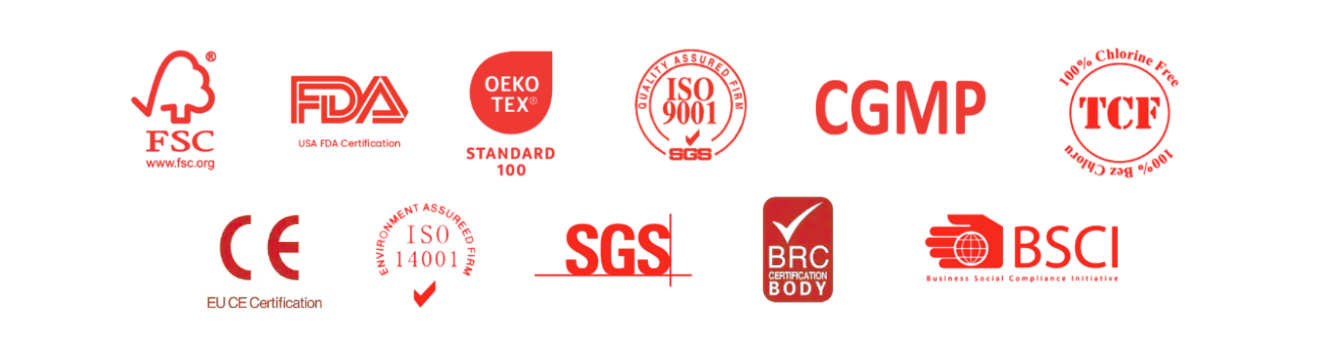
International Certification Systems
For overseas markets, certifications are not merely “bonus points” but fundamental requirements.
Common certifications include:
* ISO 9001
* ISO 13485
* CE
* FDA-related standards
* SGS testing
* OEKO-TEX
* FSC packaging certification
Especially when entering large retail chains or cross-border channels, a comprehensive certification system can significantly enhance buyer confidence.
How to Determine if a Sanitary Pad OEM Has the Capacity for Long-Term Collaboration?
When working with a supplier for the first time, many buyers focus solely on the current order.
However, a truly excellent sanitary pad OEM partner should possess the capacity for long-term growth.
1. Product Development Capabilities
The global sanitary pad market is currently undergoing rapid changes.
If a factory lacks R&D capabilities, it will be difficult for them to help brands continuously upgrade their products.
Mature sanitary pad OEM factories typically possess:
* An independent R&D team
* A materials testing laboratory
* Market trend research capabilities
* Packaging design support
* OEM/ODM development experience
For example, the Chiaus Feminine Hygiene Products pages howcases a variety of sanitary pad product solutions, including different absorbency levels, sizes, and customization options.
2. Global Market Experience
Sanitary pad OEM factories with international market experience typically have a better understanding of:
* Country-specific regulations
* Packaging language requirements
* Customs clearance documentation
* Market preferences
* International logistics coordination
For example:
* The Middle East market prefers high absorbency
* The Southeast Asian market prioritizes breathability
* The European market prioritizes eco-friendly materials
* The Latin American market prioritizes value for money
This expertise directly impacts product development efficiency.
3. Communication and Project Management Capabilities
In international trade, communication efficiency is an integral part of production efficiency.
Mature sanitary pad OEM factories typically possess:
* An English-speaking project team
* A rapid quoting system
* Sample production process management
* An order tracking system
* An after-sales feedback mechanism
Buyers can generally assess a factory’s internal coordination capabilities based on the speed of initial communication.
Future Supply Chain Trends in the Sanitary Pad Industry
In the coming years, the global sanitary pad industry will continue to evolve in the following directions:
Increased Automation
As labor costs rise, automated production will become the norm.
In the future, high-efficiency sanitary pad OEM factories will further adopt:
* AI-powered visual inspection
* Automated warehousing
* Digital production scheduling
* MES (Manufacturing Execution System)
This will further enhance production stability and delivery efficiency.
Demand for More Eco-Friendly Products
An increasing number of countries are prioritizing sustainability.
Consequently:
* Biodegradable packaging
* Organic cotton
* Reduced-plastic designs
* FSC-certified materials
will all become key trends in the sanitary pad market.
Growing Demand for Faster Customization
Future brand competition will increasingly rely on differentiation.
Buyers will place greater emphasis on:
* Small-batch customization
* Rapid prototyping
* Flexible production
* Multi-SKU management
This places higher demands on the production coordination capabilities of sanitary pad OEM factories.
Conclusion
Against the backdrop of intensifying competition in the global feminine hygiene products market, selecting a highly efficient and reliable sanitary pad OEM manufacturer has become critical to a brand’s long-term growth.
A truly outstanding sanitary pad supplier not only provides consistent products but also helps brands:
* Improve market responsiveness
* Mitigate supply chain risks
* Enhance product competitiveness
* Support long-term brand growth
For international buyers, evaluating sanitary pad manufacturers should not focus solely on price but should instead consider the following factors comprehensively:
Only sanitary pad OEM partners with truly comprehensive manufacturing capabilities can help brands maintain a competitive edge in future international markets.
FAQ
1. How do I choose a reliable sanitary pad OEM manufacturer?
We recommend focusing on the following aspects:
* Automated production capabilities
* International certifications
* Export experience
* Product consistency
* Sample turnaround time
* Communication efficiency
* Raw material supply chain
Additionally, it is best to request that the factory provide authentic production videos and third-party testing reports.
2. What is the typical minimum order quantity (MOQ) for sanitary pad OEM?
Requirements vary by factory.
For standard custom sanitary pad OEM projects, the MOQ is typically:
* 1–2 containers
* Or approximately 100,000–300,000 pieces
However, some established factories also support small-batch trial orders.
3. Which sanitary pad products are more popular in the international market?
Current fast-growing categories include:
* Organic sanitary pads
* Ultra-thin sanitary pads
* Overnight sanitary pads
* Biodegradable sanitary pads
* Individually wrapped sanitary pads
Environmental friendliness and comfort are key trends.
4. Why does production efficiency affect sanitary pad procurement costs?
Higher production efficiency typically means:
* Lower waste
* Lower downtime
* More manageable labor costs
* More stable delivery
In the long term, high-efficiency sanitary pad OEM factories can often help brands reduce overall supply chain costs, not just the price of a single purchase.