Choosing the right adult diaper manufacturer is an important decision for distributors, importers, healthcare product wholesalers, and private-label brands. Beyond comparing unit prices, buyers need to evaluate product performance, manufacturing capabilities, quality management, customization options, and long-term supply reliability.
A product that looks competitive in a quotation may not necessarily meet the expectations of end users or the requirements of a target market. Differences in absorbent core construction, material selection, leakage protection, and production consistency can directly affect product quality and customer satisfaction.
This guide outlines eight practical factors to help international buyers assess potential manufacturing partners, compare suppliers, and make more informed sourcing decisions.
1. Evaluate Product Quality and Absorbency Performance
Product quality should be one of the first considerations when evaluating an adult diaper manufacturer. Adult incontinence products are designed for different levels of urinary incontinence, user needs, and wearing scenarios. Therefore, buyers should look beyond product appearance and evaluate measurable performance.
Key product characteristics to examine include:
Absorption capacity: How much liquid can the product absorb under the agreed test conditions?
Absorption speed: How quickly does the absorbent core take in liquid?
Rewet performance: How effectively does the product keep moisture away from the skin-facing surface?
Leakage protection: Do the leg cuffs, elastic barriers, and core structure help prevent side leakage?
Fit and comfort: Are the waist, leg openings, and fastening systems suitable for the intended users?
Material quality: Are the topsheet, backsheet, absorbent core, and other components consistent with the agreed specifications?
Buyers should request samples and compare competing products using the same testing conditions.
For example, absorption capacity alone does not provide a complete picture of product performance. A diaper with a high total absorption capacity may still have unsatisfactory rewet performance or leakage control.
Practical tip : Ask manufacturers to provide product specifications, sample testing results, and the test methods used. Establish clear acceptance criteria before mass production rather than relying on general descriptions such as "high absorbency" or "super dry."
2. Verify Factory Capabilities and Production Capacity
A reliable adult diaper manufacturer should have the production infrastructure and operational capabilities to support your expected order volume.
When evaluating a factory, buyers should investigate:
Production equipment and lines
How many adult diaper production lines are available?
Can the factory manufacture both tape-style adult diapers and pull-up pants?
What is the production capacity per day or month?
Can production capacity be adjusted during peak seasons?
Manufacturing facilities
Does the supplier operate its own factory or outsource production?
Are raw material storage and production areas properly organized?
Are production processes monitored and documented?
Can the manufacturer arrange factory visits or live video inspections?
Order fulfillment
Can the factory meet your required lead time?
Does it have experience handling large-volume export orders?
How does it manage production schedules when multiple orders are running simultaneously?
A factory's stated production capacity should be verified against actual equipment, production schedules, and historical order performance.
For long-term cooperation, production stability is often more valuable than an impressive maximum-capacity figure.
Certifications can provide useful evidence of a manufacturer's management systems, production controls, and compliance capabilities. However, buyers should understand what each certification actually covers.
Common certifications and documents to review include:
Scope, test items, issuing organization, and validity
Product test reports
Performance and safety-related test results
When reviewing certificates, verify:
Whether the certificate belongs to the actual manufacturing entity.
Whether the factory address and business scope match the supplier.
Whether the certificate is still valid.
Whether its scope covers the relevant production activities.
Whether supporting reports are available for the specific product.
Do not assume that a manufacturer is fully compliant simply because it displays several certification logos.
Important: Regulatory requirements vary by destination market and product classification. For example, buyers supplying the United States should review the applicable FDA classification and requirements for protective garments for incontinence. In the EU, CE marking is only required for products covered by specific EU harmonization legislation. It should not be treated as a universal requirement for every adult diaper.
4. Assess OEM and Private Label Manufacturing Capabilities
For distributors and established brands, customization is often a major reason to work directly with an adult diaper manufacturer.
A capable OEM/ODM partner should offer more than printing a logo on existing packaging. Buyers should evaluate the manufacturer's ability to customize product specifications and packaging according to their market positioning.
Consider the following customization options:
Customization Area
Details to Discuss
Product type
Adult tape diapers, pull-up pants, and underpads
Absorbent core
SAP ratio, fluff pulp, core structure, and absorbency level
Materials
Topsheet, backsheet, fastening tapes, and elastic components
Product size
Waist range, dimensions, and size grading
Packaging
Individual bags, retail packs, bulk packaging, and cartons
Branding
Logo printing, packaging artwork, and private label design
Buyers should also clarify minimum order quantities (MOQs), sample development costs, artwork approval procedures, and production lead times.
Before approving a customized product, request a pre-production sample and confirm that the approved specifications will be followed during mass production.
This helps reduce misunderstandings and ensures that the final product aligns with the buyer's brand requirements.
5. Examine Raw Material Sourcing and Supply Chain Stability
Adult diaper performance depends heavily on the quality and consistency of raw materials.
A manufacturer's sourcing capabilities can influence product quality, production continuity, and cost stability.
Important materials to investigate include:
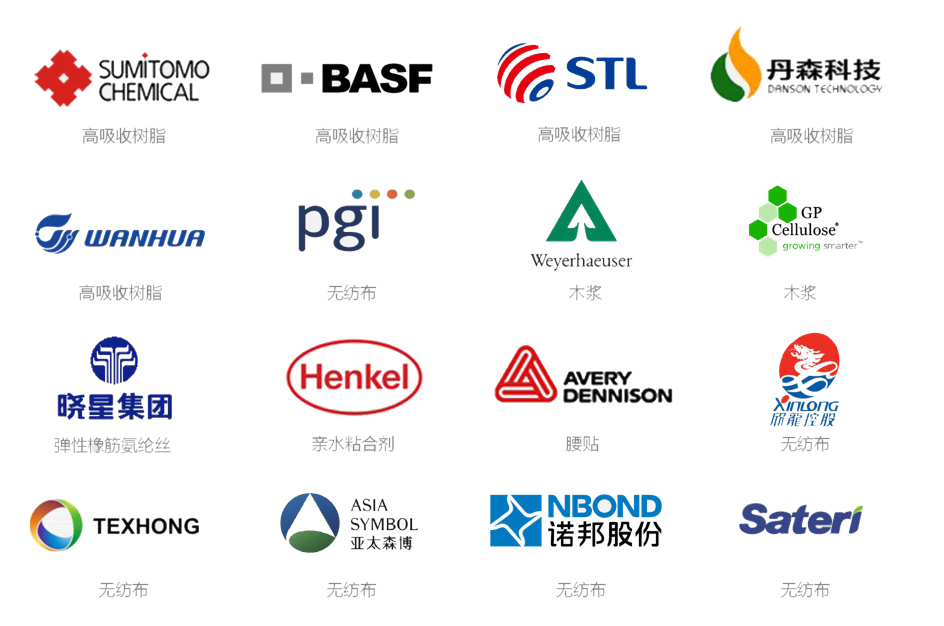
Super Absorbent Polymer (SAP): Responsible for absorbing and retaining liquid.
Fluff pulp: Helps distribute liquid throughout the absorbent core.
Nonwoven fabric: Used in skin-contact layers and other product components.
PE film: Commonly used as a waterproof backsheet material.
Elastic materials: Help improve fit around the waist and legs.
Hot melt adhesive: Used to bond different product layers.
When evaluating suppliers, ask:
Where are the main raw materials sourced?
Are qualified alternative suppliers available?
How does the factory inspect incoming materials?
Are material specifications documented?
How are changes in raw material suppliers communicated to customers?
A manufacturer with a structured raw material management process can better control variations between production batches.
6. Review Sample Development and Quality Control Procedures
Samples are an important part of supplier evaluation, but buyers should also understand how the manufacturer maintains quality after sample approval.
A structured quality control process should cover multiple production stages.
Incoming Quality Control (IQC)
Raw materials should be checked against approved specifications before entering production.
In-Process Quality Control (IPQC)
Production parameters, product dimensions, material placement, and assembly consistency should be monitored during manufacturing.
Final Quality Control (FQC)
Finished products should be inspected according to agreed quality standards and sampling plans before shipment.
Buyers can ask the manufacturer for:
Incoming material inspection records.
In-process inspection procedures.
Finished product inspection reports.
Defect classification and handling procedures.
Batch identification and traceability records.
Corrective and preventive action procedures.
It is also useful to establish a clear process for handling defective products, customer complaints, and quality disputes.
The key question is not simply whether a factory performs inspections, but whether it can demonstrate a consistent and documented quality management process.
7. Compare Pricing, MOQ, and Total Sourcing Costs
Price is an important factor, but the lowest quotation does not always represent the best sourcing value.
When comparing adult diaper manufacturers, buyers should evaluate the total cost of sourcing rather than focusing exclusively on the unit price.
Consider these cost components:
Product specifications and raw material quality.
Customization and packaging costs.
Minimum order quantities.
Sample development expenses.
Shipping and packaging efficiency.
Payment terms.
Production lead times.
Potential costs associated with defects or delayed delivery.
For example, two suppliers may quote different prices for products with similar appearances. However, their absorbent core structures, SAP content, material specifications, and quality control standards may differ significantly.
To make a fair comparison, request quotations based on the same product specifications, packaging requirements, order quantity, and delivery terms.
A transparent quotation makes it easier to identify the real differences between manufacturers.
8. Evaluate Export Experience and Long-Term Cooperation
For international buyers, a manufacturer's export experience can be an important indicator of its ability to support cross-border business.
An experienced export-oriented adult diaper manufacturer should understand the documentation, packaging, communication, and logistics requirements involved in international shipments.
Before selecting a supplier, consider asking:
Which countries and regions has the manufacturer supplied?
Does it have experience with your target market?
Can it provide the required export and shipping documents?
Can it support product labeling and packaging requirements?
Does it have a dedicated export sales or customer service team?
How does it handle repeat orders and after-sales issues?
Buyers should also evaluate communication efficiency.
A reliable manufacturing partner should be able to explain product specifications clearly, respond to technical questions, provide production updates, and communicate potential delays promptly.
Chiaus have cooperated with more than 30 countries, and there are case studiesyou can read first,and we will updating and improvring.
A Practical Checklist for Evaluating an Adult Diaper Manufacturer
Before making a final sourcing decision, buyers can use the following checklist to compare potential suppliers.
Evaluation Criteria
Questions to Ask
Product Quality
Are absorption, rewet, and leakage performance verified?
Factory Capability
Does the factory have suitable production lines and capacity?
Certifications
Are certificates valid and relevant to the manufacturing entity?
OEM/ODM Services
Can product specifications and packaging be customized?
Raw Materials
Are material sources and specifications documented?
Quality Control
Are IQC, IPQC, and FQC procedures established?
Pricing
Are quotations based on comparable specifications and order terms?
Export Experience
Can the manufacturer support your target market and shipment requirements?
Rather than selecting a supplier based on one attractive factor, buyers should evaluate the overall performance of each manufacturer against their business priorities.
Why Choose Chiaus as Your Adult Diaper Manufacturing Partner?
For buyers looking for a manufacturing partner with experience in disposable hygiene products, Chiaus provides OEM and ODM manufacturing solutions for international markets.
With experience in the disposable hygiene industry since 2006, Chiaus supports business partners seeking customized product development, private label manufacturing, and long-term supply cooperation.
Our manufacturing solutions cover different disposable hygiene product categories, including adult incontinence care products.
What buyers can discuss with Chiaus:
OEM and ODM Solutions: Customized product specifications, materials, sizes, and packaging.
Product Development: Support for different adult incontinence product requirements and market positioning.
Private Label Manufacturing: Brand customization and packaging design coordination.
Manufacturing Support: Factory production coordination and quality management processes.
Export Cooperation: Support for international buyers, distributors, and brand owners.
Whether you are developing a new adult care brand, expanding your existing product range, or sourcing a long-term OEM manufacturing partner, choosing a supplier with the right product and operational capabilities is essential.
Contact the Chiaus team to discuss your adult diaper specifications, target market, and OEM/ODM requirements.
Looking for a reliable adult diaper manufacturer? Let's discuss your project.
1. What should buyers look for in an adult diaper manufacturer?
Buyers should evaluate product performance, factory production capacity, quality management systems, raw material sourcing, OEM/ODM capabilities, pricing transparency, and export experience. Product samples and factory verification are also important before placing a bulk order.
2. How can I verify whether an adult diaper manufacturer is a real factory?
Request the company's business license, factory address, production line information, manufacturing photos or videos, and relevant audit documents. Whenever possible, arrange an on-site factory visit or independent third-party inspection.
3. What certifications should an adult diaper manufacturer have?
The relevant certifications depend on the manufacturer's business operations and the target market. ISO 9001 can demonstrate a quality management system, while ISO 14001 and ISO 45001 relate to environmental management and occupational health and safety. Buyers should verify each certificate's scope and validity instead of relying on certification logos alone.
4. Can adult diaper manufacturers provide OEM and private label services?
Many manufacturers offer OEM and private label services, including customized absorbent cores, product sizes, materials, packaging, and brand printing. Buyers should confirm MOQ, sample development procedures, artwork requirements, and production lead times before starting a project.
5. How do I compare quotations from different adult diaper suppliers?
Compare quotations using identical product specifications, including product weight, SAP content, absorbent core construction, dimensions, materials, packaging, order quantities, and delivery terms. This helps ensure that price differences reflect actual product and service differences.
6. Why should buyers request samples before bulk production?
Samples allow buyers to assess product fit, absorbency, rewet performance, leakage protection, material feel, and packaging quality. Approved samples can also serve as a reference for confirming product specifications before mass production.