Baby diapers, as the most frequently used daily care product for infants and toddlers, directly impact a baby's healthy development and determine a brand's competitiveness in the international market. For overseas B2B buyers and end-user parents, mastering International Safety Standards is the core criterion for selecting safe diapers. Only products compliant with globally recognized safety guidelines can navigate different countries and regions seamlessly while earning consumers' long-term trust. This article delves into the core elements of International Safety Standards for Baby Diapers, empowering buyers to make precise selections and providing parents with scientifically sound purchasing guidance.

Core Framework for International Security Standards
International Safety Standards for Baby Diapers are not a single guideline but a series of standards established by major global economies and authoritative bodies. These standards encompass multiple dimensions including raw material safety, production processes, performance metrics, and environmental requirements. While variations exist across countries and regions, the core objective remains safeguarding infants' and toddlers' skin health and usage safety—the fundamental prerequisite for safety diapers.
As one of the world's most stringent regions for regulating maternal and infant product safety, the European Union's standards set a significant benchmark for International Safety Standards. The REACH Regulation, as the core EU legislation for chemical management, imposes stringent restrictions on chemicals used in baby diapers, explicitly prohibiting or limiting high-risk components such as carcinogens and toxic substances. Additionally, the EU ECOCLABEL certification not only requires baby diapers to meet environmental standards in material selection but also enforces strict controls over pollutant emissions and energy consumption during production. Products bearing this certification gain a significant competitive edge in the European market. For infants and toddlers with sensitive skin, certification from Germany's Dermatest Medical Institute holds significant value. Safety diapers bearing this certification undergo multiple laboratory tests for skin irritation, allergenicity, and long-term safety, ensuring no harm to babies' delicate skin.
The U.S. market enforces equally stringent safety regulations for baby diapers, establishing a dual-assurance system centered on FDA registration and CPC certification. Under U.S. regulations, baby diapers are classified as Class I medical devices requiring FDA registration for market entry. The registration process mandates submission of critical documentation, including material safety certificates and microbiological test reports, to verify absence of harmful substances like fluorescent agents and formaldehyde, alongside compliance with microbial standards for pathogens such as E. coli and Staphylococcus aureus. Additionally, all baby diapers entering the U.S. market must hold a CPC (Certificate of Children's Product). This certificate, issued by third-party laboratories after testing, explicitly confirms the product's compliance with relevant safety standards set by the U.S. Consumer Product Safety Commission (CPSC), including maximum allowable levels of harmful substances like lead and phthalates. Detailed requirements for CPC certification can be found in the authoritative guidance on the CPSC's official website.

Beyond core European and American markets, International Safety Standards in other regions often draw from these frameworks while adapting specifics to local needs. For instance, the Asthma Allergy Nordic certification in Northern Europe mandates that baby diapers be entirely free of allergenic components throughout the entire supply chain—from raw material sourcing to manufacturing—providing significant protection for infants with allergies. The U.S. USDA Bio-Preferred certification focuses on the use of bio-based materials, encouraging companies to produce safety diapers using renewable materials like plant fibers. This reduces reliance on petroleum-based materials, balancing safety and environmental sustainability. Together, these standards form a global network for regulating baby diaper safety and provide clear direction for companies pursuing international expansion.
Practical Verification Methods for International Safety Standards
For overseas B2B buyers, verbal assurances from suppliers alone cannot guarantee product compliance with International Safety Standards. Scientific verification methods must be mastered. For parents, these methods also help accurately identify safe products during selection. Below are actionable verification solutions across three levels: certification mark verification, testing report review, and production process traceability.
Certification marks serve as tangible proof of a product's compliance with International Safety Standards. Each standard corresponds to a unique, authoritative mark, enabling buyers and parents to conduct rapid preliminary screening through mark recognition. For instance, products in the EU market bearing the EU ECOCLABEL "European Flower" mark indicate compliance with both environmental and safety standards. The German Dermatest "Seal of Approval" mark signifies rigorous verification of skin safety. For the U.S. market, products must prominently display FDA registration numbers and CPC certification marks. FDA registration numbers can be verified through the U.S. FDA's official database to prevent counterfeiting. Note that some certification marks have tiered ratings—such as Dermatest's five-star and four-star classifications—where higher ratings indicate superior safety performance. Buyers should select safety diapers with corresponding ratings based on target market requirements.
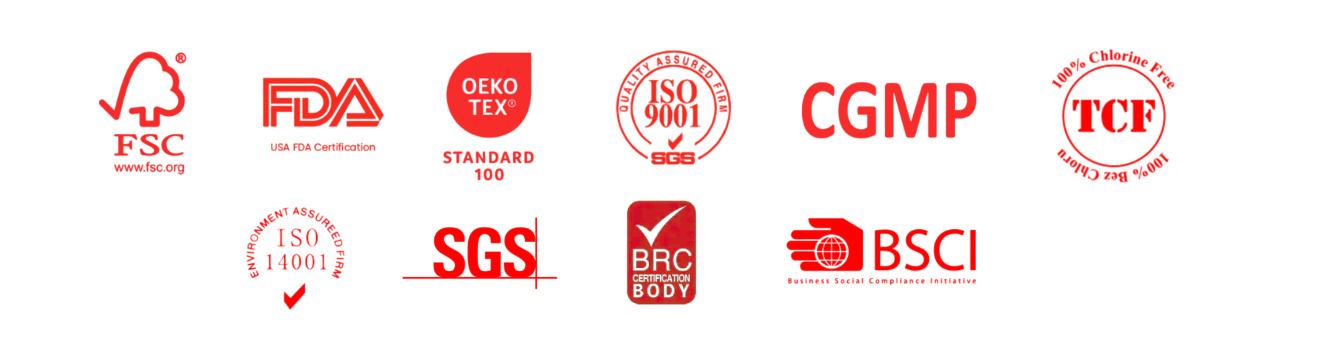
Test reports serve as the core evidence verifying compliance with International Safety Standards. Before collaborating with suppliers, buyers should request test reports issued by authoritative third-party laboratories and rigorously verify key indicators. From a safety perspective, focus on the content of harmful substances such as heavy metals (e.g., lead, mercury), migratory fluorescent substances, formaldehyde, and phthalates, ensuring they do not exceed the corresponding standard limits. From a performance perspective, indicators like absorption speed, re-wetting volume, and leak-proofing must also meet standards. For instance, both EU and China's new national standards require Baby Diapers to achieve initial absorption within ≤50 seconds and re-wetting volume ≤15.0g. These metrics directly impact product usability and safety. Taking Chiaus Baby Diapers as an example, every batch undergoes testing by internationally authoritative laboratories like SGS. Test reports cover the aforementioned key indicators.
Production traceability is crucial for ensuring long-term compliance with International Safety Standards, particularly for B2B buyers. Gaining deep insight into a supplier's production control system is essential. Premium safety diaper manufacturers typically establish comprehensive quality control systems across the entire supply chain. This begins with rigorous sourcing of compliant materials—such as EWG-certified outer layer materials—to ensure absence of potentially harmful chemicals. During production, automated lines minimize human contamination while multiple online inspection points monitor real-time metrics like dimensional deviations and impurity levels. Before shipment, finished products undergo sampling inspections to guarantee each batch meets corresponding International Safety Standards. Buyers can verify suppliers' production control capabilities through factory audits and site visits. Chiaus' globally distributed production bases adhere to unified quality control standards.
Adherence to International Safety Standards
Against intensifying global competition in the maternal and infant market, adherence to International Safety Standards is no longer merely a "bonus point" for enterprises. It has become the "key to unlocking" international markets and a cornerstone for building brand competitiveness. For baby diaper manufacturers, meeting safety standards not only opens pathways to overseas markets but also reduces operational risks, enhances brand premium, and enables sustainable development.
Compliance with International Safety Standards is a prerequisite for baby diapers to enter mainstream overseas markets. Take the EU and US markets as examples: products failing to pass REACH regulation audits, complete FDA registration, or obtain CPC certification will not only be denied customs clearance but may also face hefty fines and market entry bans. In recent years, multiple countries and regions have intensified oversight of maternal and infant products. For instance, the EU enforces a zero-tolerance policy for decomposable carcinogenic aromatic amine dyes in baby diapers, while the US CPSC frequently initiates recalls for non-compliant products. Conversely, safety diapers that meet standards can smoothly enter major global markets and expand their sales reach. By strictly adhering to International Safety Standards, Chiaus baby diapers are now exported to over 30 countries and regions across Europe, the Americas, and Southeast Asia, making the company a preferred partner for numerous overseas buyers.
Upholding safety standards helps baby diaper companies build brand trust and enhance product premium pricing power. In the maternal and infant consumption sector, safety is the core concern for consumers, with parents willing to pay higher prices for safety diapers meeting international safety standards. Market research indicates that baby diapers bearing authoritative safety certification marks typically command 10%-20% higher market prices than ordinary products and enjoy higher repurchase rates. Simultaneously, meeting safety standards elevates a brand's international recognition. For instance, Chiaus Diapers has established a "safe and reliable" brand image in overseas markets by obtaining multiple authoritative certifications, including the Dermatest Five-Star Certification and the EU Ecolabel. Its extended product lines, such as baby pull-up pants, have rapidly gained market traction through brand reputation. Further product information is available at chiausdiapers.com.
From a long-term development perspective, adhering to International Safety Standards helps businesses mitigate operational risks and achieve sustainable growth. Products failing to meet safety standards risk triggering consumer complaints, brand reputation crises, and potentially massive compensation claims and recall costs. Conversely, companies committed to safety standards establish robust quality control systems, reducing quality issues at their source. Furthermore, International Safety Standards undergo continuous updates and iterations. For instance, the EU REACH regulation periodically revises its list of restricted chemicals. Complying with these standards compels companies to drive technological innovation and process upgrades, thereby enhancing their products' core competitiveness. Chiaus has established a dedicated R&D team that tracks global updates to International Safety Standards in real time, integrating the latest safety requirements into product development to ensure products consistently meet market regulatory demands.
Conclusion
As a company with years of deep expertise in the baby diaper sector, Chiaus consistently adheres to International Safety Standards as the core principle for product development and manufacturing. From raw material selection and production control to finished product testing, every step is rigorously managed. We are committed to providing safe and comfortable safety diapers for infants and toddlers worldwide, while offering stable and compliant supply chain support to overseas B2B buyers.
Beyond product safety controls, Chiaus provides comprehensive compliance support services for overseas B2B buyers. Addressing variations in International Safety Standards across different countries and regions, Chiaus professional team delivers customized compliance solutions. This includes assisting with product registration in target markets and providing label designs and packaging solutions that meet local requirements. Furthermore,Chiaus maintains a rapid response mechanism. Should regulatory standards evolve, buyers are promptly notified and offered product upgrade plans, ensuring their inventory consistently meets market demands.
In summary, International Safety Standards form the cornerstone for baby diaper enterprises to establish themselves in the global market and serve as the key criterion for buyers and parents when selecting safe diapers. Whether manufacturers, buyers, or end consumers, all should place high importance on adhering to and verifying safety standards. Chiaus will continue to be guided by International Safety Standards, continuously enhancing product safety performance and compliance levels. This commitment aims to provide higher-quality baby diaper products for infants worldwide and offer overseas B2B buyers a more reliable supply chain partnership option. For more information about Chiaus Baby Diapers, baby pull-up pants, or compliance services, please visit Chiaus website.


