Incontinence means you lose control of your bladder or bowel. It is not a personal failing. It is a health issue, and you can manage it.
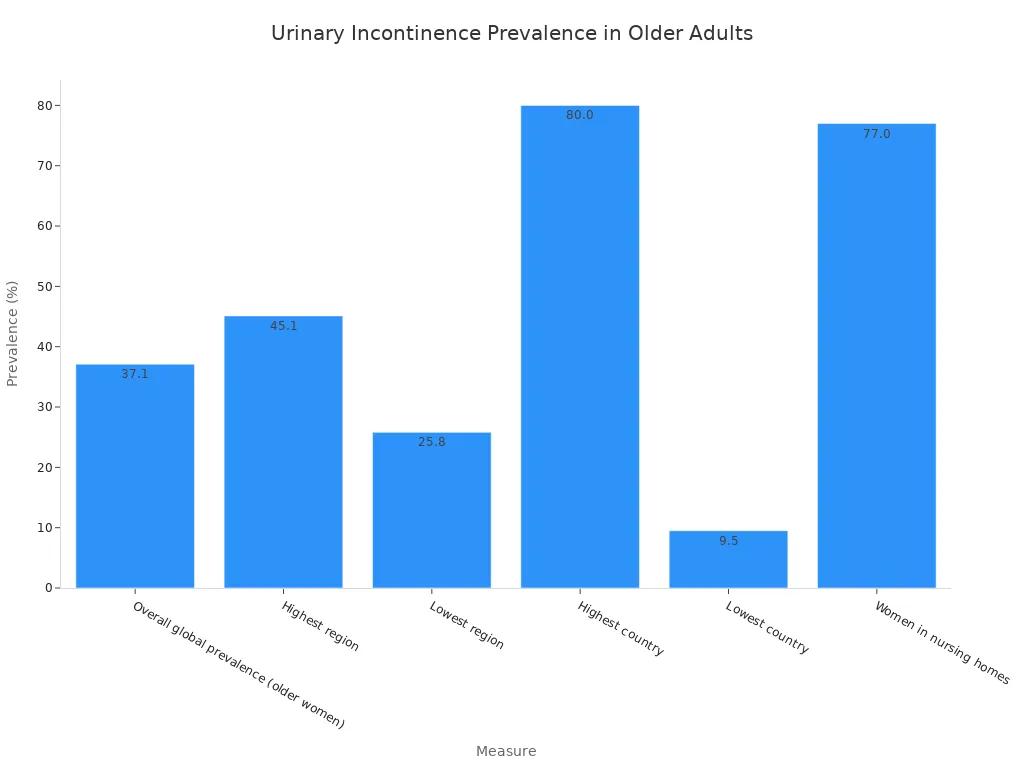
Urinary incontinence is common among people over age 60. A study by Aly et al. found bladder control problems in 80% of women over 60. Ignoring incontinence problems affects your health, dignity, and daily life. Yet help exists, and small steps often bring real relief.
You deserve honest answers and practical support. This incontinence management guide older adults can trust starts with one simple idea: talk openly, and act early. Good management begins with understanding.
Key Takeaways
Incontinence is a common health problem, not a personal failure, and you can manage it with small steps.
Try bladder training and pelvic floor exercises to make muscles stronger and cut down on leaks.
Change what you eat and drink to avoid things that bother your bladder and to prevent constipation.
Pick the right absorbent products to stay comfortable and protect your skin.
Ask your doctor about warning signs and treatment choices to help you control your bladder better.
Understanding Urinary Incontinence in Older Adults
Many body changes raise the risk of urinary incontinence in older adults. Some you cannot control. Others you can change. This section explains the causes and the main types.
Common Causes and Risk Factors
Age brings muscle loss of about 3–5% per decade. This weakens the muscles that hold up the bladder. Lower estrogen after menopause makes pelvic tissues thinner. The bladder also holds less urine over time. Brain conditions like Alzheimer's and Parkinson's confuse bladder signals. An enlarged prostate can cause leaks in men. Hysterectomy, diabetes, stroke, and multiple sclerosis also raise risk. Urinary incontinence in older adults rarely has just one cause.
Some causes you can change. Coffee, tea, alcohol, fizzy drinks, and acidic foods can make urgency worse. Urinary tract infections make you feel like you need to go more often. Extra weight puts stress on the bladder. A sedentary lifestyle weakens the pelvic floor. Constipation and some medications can also make symptoms worse. Tell your doctor about both. Understanding incontinence in the elderly means looking at all these factors together.
Main Types of Incontinence
Understanding why elderly adults have urinary incontinence starts with the type. Each type has a different cause and a different fix.
Type
What the leak looks like
Underlying fault
Stress
A small spurt when you cough, sneeze, laugh, or lift
Weak pelvic support lets pressure overwhelm the seal
Urge
A sudden strong need, often with larger leaks
The bladder muscle contracts before the bladder is full
Overflow
Constant dribbling and a sense of incomplete emptying
The bladder never fully empties and overfills
Functional
A leak because the toilet is out of reach in time
Mobility, thinking, or environment blocks bathroom access
Stress incontinence means leaking urine during a sneeze. Urge incontinence means a sudden rush you cannot stop. Overflow incontinence means frequent dribbling from a full bladder. Functional incontinence means the urinary tract works fine, but arthritis or dementia stops timely toileting. Naming the type guides good management. It protects bladder control and helps with incontinence in elderly individuals. It also supports incontinence in older adults day to day.
Behavioral Techniques for Managing Incontinence in the Elderly
Behavioral techniques cost nothing and have no side effects. They retrain the body and rebuild strength. You can start both approaches this week.
Bladder Training and Timed Voiding
Timed voiding means you go to the toilet on a schedule, not when you feel the urge. The Cleveland Clinic advises emptying the bladder every two to three hours, even if you don't feel like you need to go. Research supports this rhythm. Many studies, from Ouslander in 1988 to Schnelle in 1995, used a fixed two-hour toileting schedule with nursing home residents. You can use the same idea at home.
Try this simple plan. Set a timer for every two to three hours during the day. Help the person to the toilet at each prompt, whether or not they feel the need. Keep a written log of wet and dry checks for one week. The log shows patterns, and patterns guide adjustments.
Pair the schedule with a fluid plan. Offer most drinks between morning and early evening. Reduce fluids two to three hours before bed. Avoid caffeine and alcohol, which bother the bladder. This combination forms the backbone of incontinence management for the elderly.
Pelvic Floor Exercises and Toileting Routines
Pelvic muscle exercises, often called Kegels, strengthen the muscles that support the urethra and rectum. These muscles can weaken with age, childbirth, surgery, or obesity. Stronger muscles restore better bladder control and bowel control. Research shows pelvic floor training reduces leakage in both stress and urge urinary incontinence.
Here is how to do a Kegel correctly:
Squeeze the muscles as if you are trying not to pass gas. Keep your belly, legs, and buttocks still.
Hold the squeeze for 3 seconds, then relax for 5 to 10 seconds.
Add 1 second per week to the hold until you reach 10 seconds.
Repeat 10 times per session, aiming for 3 to 8 sessions per day.
Do not practice Kegels while urinating. That habit can harm the bladder over time. Stop and see a doctor if the exercises cause pain or bring no improvement after 3 to 4 months.
Pair pelvic muscle exercises with a daily habit, such as brushing teeth or watching the morning news. A fixed anchor makes the routine stick. Combine pelvic muscle exercises and bladder training for the strongest results. Together they address both muscle weakness and urgency.
Toileting routines complete the picture. Offer a trip to the bathroom before leaving home, after meals, and before sleep. Managing incontinence in seniors becomes easier when the toilet visit is predictable. Managing incontinence in elderly individuals also improves when caregivers prompt gently and without pressure. Good incontinence management in elderly adults rests on these small, steady habits. Managing incontinence in the elderly takes patience, and managing urinary incontinence takes consistency. This management approach rewards both. Urinary incontinence responds well to pelvic muscle exercises, and incontinence management improves when you track progress weekly.
Lifestyle and Environmental Adjustments
Diet, Fluids, and Constipation Care
What you eat and drink affects how often your bladder tells you to go. Small changes to your daily habits can ease urinary incontinence without any medication. Start with these adjustments:
Cut back on drinks with caffeine (coffee, tea, cola) and alcohol, but keep drinking water.
Aim for four to six glasses of water or drinks without caffeine each day. Too little fluid makes your bathroom urges less regular, and strong urine bothers the bladder.
For nighttime leaks, stop drinking two to three hours before bed.
Follow a fluid schedule to retrain the bladder. Limit drinks after 6 p.m. to reduce nighttime bathroom trips.
Limit things that bother the bladder, such as caffeine, alcohol, foods high in citrus, and tobacco.
Prevent constipation with a diet rich in fiber and enough water. A full bowel pushes on the bladder and makes symptoms worse.
A written fluid plan helps you spot patterns. Track what you drink and when leaks happen for one week. This simple record supports good incontinence management and gives your doctor useful clues.
Home Modifications for Safety and Dignity
Your bathroom should feel safe when you suddenly need to go. Install sturdy grab bars beside the toilet and shower for stability. Choose a toilet seat height of 17–19 inches to make sitting and standing easier. Put down non-slip flooring to prevent falls during urgent trips. Remove loose rugs and clutter that cause tripping. Keep the bathroom and hallways well-lit, especially at night. A bedside commode or portable toilet helps when moving around is hard.
Privacy matters just as much as safety. Design bathroom spaces with privacy in mind, including accessible bathrooms, to protect dignity. These changes protect bladder control and lower the stress that can trigger leaks. Good incontinence care at home pairs a safe layout with respect for the person using it.
Choosing Absorbent Products with Chiaus
Absorbent products are one helpful tool in your overall plan. They work best alongside the behavioral and lifestyle strategies above. They do not replace bladder training or pelvic floor exercises. They simply add a layer of security while those habits take effect.
Chiaus makes adult diapers, pull-up pants, and incontinence underpads for different needs. The company holds FDA, ISO, and OEKO-TEX certifications among its quality credentials. Distributors can also request OEM and ODM service for customized products.
Matching Products to Needs
Match the product to how much you leak and your daily routine. A review of randomized trials found no single best design for everyone. The right choice depends on gender, setting, and time of day. The review also suggests that mixing designs, like one product for day and another for night, may work better and cost less than using just one type.
Absorbency Level
Typical Products
Best Suited For
Light
Liners, thin pads
Small leaks, occasional dribbling
Moderate
Pads, protective underwear
More frequent leakage, daily wear
Heavy
Protective underwear, briefs
Larger volume leaks, reduced mobility
Maximum
Adult briefs, overnight underwear
Extended wear during sleep
Check the drop symbols on packaging. More drops mean higher absorbency. Active adults often prefer pull-up pants for trips out. Bedridden adults may need all-in-one briefs with extra support. Incontinence underpads protect bedding and chairs as a backup layer.
Fit, Skin Care, and Disposal Tips
A proper fit prevents leaks and skin breakdown. Measure the waist and hips against the size chart before you buy. Change the product regularly, even when it is only partly wet. Clean the skin at each change with a mild, pH-balanced, fragrance-free cleanser. Pat the skin dry instead of rubbing. Apply a moisturizer or protective barrier cream to shield skin from moisture.
Throw away used products the right way:
Wrap the used product in a disposal bag.
Place it in the trash.
Never flush it down the toilet.
These habits protect skin health and keep your home clean. Good incontinence management pairs the right product with consistent daily care.
When to Seek Help for Urinary Incontinence
Some leaks are just a bother you can handle at home. Other leaks are a sign that something else needs care. Knowing the difference protects your health and gives you peace of mind.
Warning Signs That Need a Doctor
Do not wait for a scheduled checkup when certain signs show up. Some symptoms point to problems that need quick care. Use this table as a guide.
Urgency
Warning Signs
Contact your doctor now
Leaks that do not go away; weakness or numbness in buttocks, legs, and feet; fever, chills, and belly or side pain; blood in urine or burning when you pee; change in bowel habits
Contact your doctor
Leaks get worse; leaking means you need a pad; leaks get in the way of daily life; sudden leaks often linked to urinary tract problems or medicines; a sudden change in your ability to pee that may not be tied to leaks
Blood in your urine or burning when you pee can be a sign of a urinary tract infection. Fever with side pain needs care right away. Weakness or numbness in your legs and buttocks deserves an urgent call. These signs may point to nerve problems beyond simple leaks.
Sudden leaks often come from a urinary tract problem or a new medicine. Bring your full list of medicines to the visit. Mention constipation too, since it can make symptoms worse.
What Healthcare Providers Can Offer
Help exists, and it starts with simple steps. Your provider will likely begin with first-line care for all types of urinary incontinence. This includes teaching you about your condition, behavior changes, vaginal estrogen when it fits, pelvic floor muscle training, weight control, fluid control, and staying away from things that bother the bladder.
If first-line care is not enough, your provider has more choices:
Second-line choices include pills, anti-leak devices such as a pessary, neuromodulation, and surgery.
Your provider checks how much symptoms improved about two months after you start treatment.
For stress leaks that do not get better, ask about a pessary fitting by a trained provider.
For urgency symptoms that continue, your provider may offer medicine and check again in about six weeks.
If treatment still fails, ask for a referral to urology or urogynecology.
Medicines for urgency cut episodes by about 30–60% per day. Use them with care in older adults. Anticholinergics can cause dry mouth, constipation, dizziness, and blurry vision. Long-term use over time is linked to a higher dementia risk. Beta-3 agonists are preferred for people with or at risk of thinking problems. Your provider may check leftover urine after you pee if you report not emptying fully. They will stop a drug if you show no real improvement after 12 weeks at the highest dose.
Specialists offer advanced treatments for leaks. These include percutaneous tibial nerve stimulation, onabotulinum toxin A shots into the bladder muscle, and sacral neuromodulation. A pessary is a medical-grade silicone device that supports the bladder neck. A trained provider fits it, and a clinician checks it every three to six months. Surgery for stress leaks includes slings and urethral bulking. Bulking has lower risk and suits frail patients. Mid-urethral slings are the best-studied option, with high success rates.
Good management means matching the treatment for urinary incontinence to your type, how bad it is, and your goals. Ask questions. Bring your symptom log. You and your provider can build a plan that protects bladder control and brings back daily confidence.
An Elderly Incontinence Care Guide for Caregivers
Preserving Dignity and Open Communication
This elderly incontinence care guide for caregivers begins with respect. The words you use shape how the person feels about their condition. Pick gentle, adult language. Say "bathroom" or "restroom" instead of "potty." Say "personal care items" instead of "diapers." These small choices protect dignity during every incontinence care task.
Start hard conversations at a calm, private moment. Try: "I want to make sure you feel comfortable. Can we talk about what feels challenging for you?" Then listen without judgment. Let the person share frustration or embarrassment. Watch for nonverbal cues too. Restlessness or sudden irritability may signal a bathroom need they cannot voice. Offer choices, such as which product to use or when to change. Encourage social outings with preparation, so they know incontinence does not define them. This caregiver guide treats bladder control as a health issue, not a shameful secret.
Preventing Caregiver Burnout
Managing incontinence in seniors takes steady energy. Watch for warning signs in yourself. Persistent fatigue, constant worry, or irritability over small matters all point to burnout. Incontinence care adds its own stress, like feeling on edge when supplies run low. Take these steps to protect yourself:
Rest when you can, and take short breaks during the day.
Accept help from family and consider respite care.
Eat regularly, stay hydrated, and take a short walk outside.
Join a caregiver support group and stay connected with friends.
Set boundaries and check in with yourself often.
Reduce decision fatigue with simple routines. Keep supplies in one place and restock before running low. Pack an outing bag with extra briefs, wipes, and a change of clothes. If stress feels unmanageable, contact a healthcare provider or counselor. A caregiver's guide works best when the caregiver stays well. Good urinary incontinence care includes caring for yourself.
Incontinence is common. It is also manageable. You now have a clear picture: understand the causes, try practical strategies, seek professional support, and care for emotions along the way. This incontinence management guide older adults can rely on boils down to steady, small actions.
Start with one or two steps this week. Set a toileting routine every two to three hours. Book a doctor's visit about your urinary incontinence. Each step builds confidence and protects bladder control.
Dignity belongs to every older adult. Support matters for caregivers too. You can face incontinence with knowledge, patience, and compassion. Progress comes one day at a time.
FAQ
How often should you schedule toileting breaks?
Set a timer every two to three hours during the day. Help the person to the toilet at each prompt, even without an urge. Track wet and dry checks for one week. This simple rhythm forms the core of most incontinence management guide older adults follow at home.
Can pelvic floor exercises really reduce leaks?
Yes. Research shows pelvic floor training reduces leakage in both stress and urge types. Squeeze as if holding back gas, hold for three seconds, and relax. Build to a ten-second hold over time. Pair the exercises with a daily habit so the routine sticks.
Which absorbent product suits light versus heavy leakage?
Match the product to how much you leak. Liners and thin pads handle small dribbles. Protective underwear and briefs suit larger volume leaks. Adult briefs work for overnight wear. Absorbent products support your plan alongside bladder training and lifestyle changes.
Does cutting back on fluids help with leakage?
Not entirely. Drinking too little concentrates urine and irritates the bladder. Aim for four to six glasses of water or caffeine-free drinks daily. Reduce fluids two to three hours before bed. This balance supports bladder control without causing new problems.
When should a caregiver call the doctor?
Call right away for blood in the urine, fever with side pain, or numbness in the legs and buttocks. Also report leaks that worsen or disrupt daily life. Early help makes urinary incontinence in older adults easier to treat. A good incontinence management guide older adults trust always includes professional support.