Welcome to being a parent! You want your baby to feel good and comfy each day. Picking the right diaper size for your newborn matters a lot. A diaper that fits right stops leaks and keeps your baby’s skin safe. Doctors say a snug diaper keeps your baby dry and stops red marks or rashes. If you use a diaper size and weight chart, you can choose the best diaper for your baby with confidence. Chiaus gives you trusted diapers for every newborn and growing baby.
Key Takeaways
Use a diaper size and weight chart to find the best fit for your baby. This helps prevent leaks and keeps your baby comfortable.
Weigh your baby regularly to ensure you choose the right diaper size. Babies grow quickly, so check their weight every two to three weeks.
Look for signs of a good diaper fit. The diaper should not leave red marks, sag, or have large gaps around the legs.
If your baby is close to the top of a size's weight range, consider moving up to the next size for better comfort and protection.
Plan ahead for diaper needs. Track how many diapers you use each week to avoid running out and ensure you have the right sizes on hand.
Choose high-quality diapers like Chiaus that offer features such as super-absorbency and a secure fit to keep your baby dry.
Be aware of your baby's unique shape. Different babies may need different diaper styles even at the same weight.
Always check the diaper fit after putting it on. Adjust the size if you notice any signs of discomfort or leaks.
Diaper Size and Weight Chart
Choosing the right diaper size for your baby can feel confusing at first. You want your baby to stay dry, comfortable, and happy. A diaper size and weight chart helps you make the best choice. This guide gives you a clear look at how diaper sizes match your baby’s weight. You can use this chart to find the perfect fit and avoid leaks or red marks.
Diaper Size Chart by Weight
You will notice that diaper sizes can vary between countries and brands. Most brands, including Chiaus, use your baby’s weight as the main factor for sizing. Here is a simple diaper size and weight chart that shows standard weight ranges for each size. This chart includes Chiaus and other industry standards from around the world.
Country/Region
Size
Weight Range (kg)
China
NB
< 5
S
3 - 6
M
5 - 10
L
9 - 14
XL
> 12
Japan
NB
0 - 5
S
4 - 8
M
6 - 11
L
9 - 14
LL
12 - 20
USA
N
< 5
1
3.6 - 6.4
2
5.4 - 8.2
3
7.3 - 12.7
Europe
1
2 - 5
2
4 - 8
3
7 - 18
South Korea
NB
< 3
S
3 - 5
M
5 - 10
L
9 - 13
XL
> 12
Australia
Newborn
2.5 - 5
Infant
4 - 9
Toddler
> 9
Russia
0
2 - 5
1
3 - 6
2
5 - 9
3
8 - 13
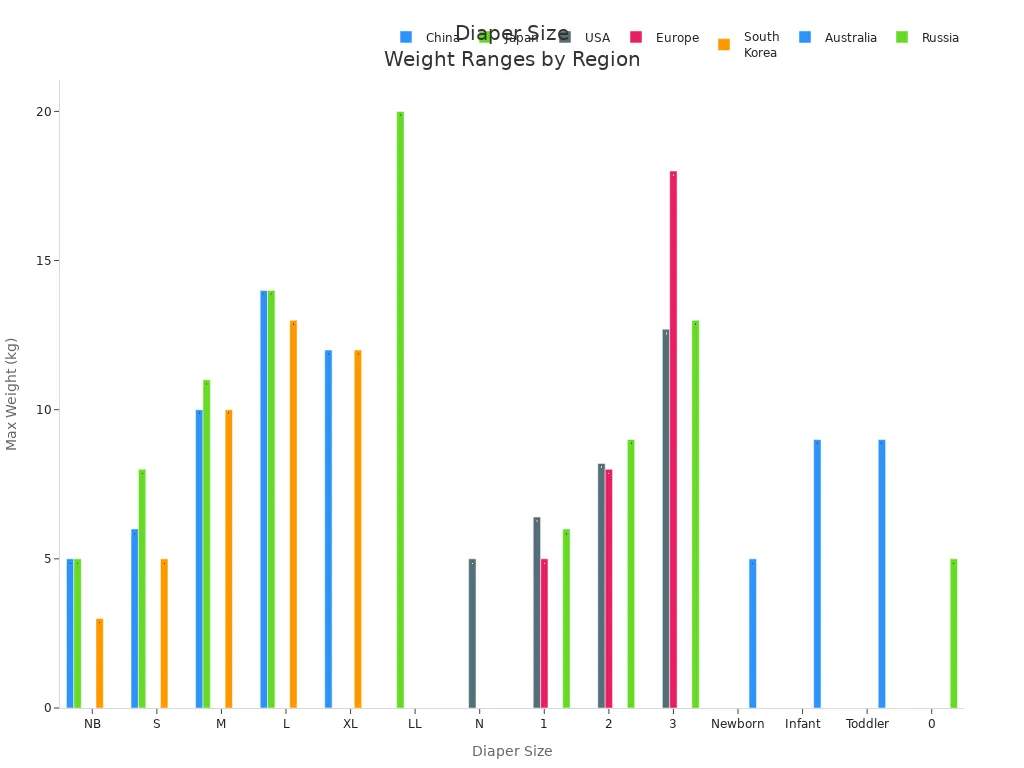
You can also see how diaper sizes compare across regions in this chart:
This diaper size chart by weight helps you match your baby’s weight to the right diaper size. Always check the package for the weight range, as some brands may use slightly different numbers.
How to Read the Chart
You can use the diaper size and weight chart as a quick guide. First, weigh your baby. If you do not have a baby scale, you can use a regular scale. Weigh yourself, then weigh yourself while holding your baby. Subtract your weight from the total to find your baby’s weight. For the best results, use a baby-specific scale if you have one. Babies grow fast, so check their weight every two to three weeks.
Once you know your baby’s weight, look at the chart. Find the weight range that matches your baby. Choose the diaper size listed for that range. If your baby is close to the top of a size’s weight range, you may want to try the next size up soon.
Tip: Always check for signs that the diaper fits well. The diaper should not leave red marks or gaps. Your baby should move freely and stay dry.
Chiaus makes it easy for you to find the right fit. The brand uses high-quality materials and advanced technology to keep your baby comfortable. Chiaus diapers go through strict testing at every step. The elastic waistband and cuffs help the diaper fit snugly, so your baby can move and play. Super-absorbent layers keep your baby dry for up to 12 hours.
Here is how Chiaus ensures quality and fit:
Feature
Description
Rigorous Testing
Every diaper goes through careful checks during production.
High-Quality Materials
Soft, gentle materials protect your baby’s skin.
Super-Absorbent
Special layers keep your baby dry for long periods.
Secure Fit
Elastic bands and cuffs prevent leaks and let your baby move easily.
Trusted Quality
Chiaus is known for its strong focus on quality and customer satisfaction.
You can trust this guide and the diaper size and weight chart to help you make the best choice for your baby. Chiaus supports you at every stage, so your baby stays happy and healthy.
Why Weight Matters for Baby Diaper Sizes
Growth Patterns and Sizing
You notice your baby grows quickly during the first year. Growth happens in spurts, and every baby follows a unique pattern. Some babies gain weight faster, while others grow steadily. You see changes in your baby’s body shape and size. These changes affect how a diaper fits.
You want your baby to stay comfortable and dry. Diaper sizing based on weight helps you achieve this goal. Weight gives you a clear measurement. You can check your baby’s weight and match it to the right diaper size. This method works better than using age alone. Babies of the same age can have very different weights. You avoid leaks and discomfort when you use weight as your guide.
Babies grow at their own pace. You should check your baby’s weight often. Adjust the diaper size as your baby grows. This keeps your baby happy and prevents skin irritation.
You see that Chiaus diapers use weight ranges to help you find the best fit. The elastic waistband and soft materials adapt to your baby’s changing shape. You can trust that your baby will stay comfortable as they grow.
Age vs. Weight for Diaper Fit
You may wonder if age or weight matters more for diaper sizing. Age gives you a rough idea, but weight tells you exactly what your baby needs. Babies of the same age can have different body shapes and sizes. You want a diaper that fits your baby, not just their age group.
Consider these facts:
Weight is a more reliable indicator for diaper sizing than age. Your baby’s individual weight and body composition influence fit.
At six months, the average weight for boys is about 17.8 pounds. Girls average 16.2 pounds. Many babies at this age weigh over 20 pounds.
If you rely only on age, you risk leaks and discomfort. Weight-based sizing helps you avoid these problems.
You should weigh your baby regularly. Use the diaper size and weight chart to choose the right diaper. If your baby is near the top of a size’s weight range, try the next size up. This keeps your baby comfortable and prevents leaks.
Tip: Always check for signs that the diaper fits well. Look for red marks, gaps, or leaks. Adjust the size if needed.
You make the best choice for your baby when you use weight as your guide. Chiaus supports you with clear sizing and quality diapers for every stage.
Checking the Right Diaper Size
Choosing the right diaper size is important for your baby’s comfort and health. You want to make sure your baby feels dry, happy, and free to move. A proper diaper fit helps prevent leaks and keeps your baby’s skin safe. You can use a diaper fit guide to check if you have the best fit for your baby.
Signs of Good Fit
You can spot a good diaper fit by looking for a few simple signs. The diaper should sit snugly around your baby’s waist and legs. It should not leave red marks or indentations. Your baby should move easily and look comfortable. The diaper should not sag or shift when your baby crawls or plays. A clean diaper should stay in place and not bunch up.
Here is a table to help you check for the best fit for your baby:
Sign of Fit
Description
No Red Marks
The diaper does not leave marks or indentations on your baby’s skin.
Snug Waist and Legs
The diaper fits closely but does not pinch or squeeze.
No Gaps
The diaper hugs your baby’s legs and waist, with no large gaps.
Stays in Place
The diaper does not sag or shift, even when your baby moves.
Comfortable Movement
Your baby can kick, crawl, and play without discomfort.
You can use this diaper fit guide every time you change your baby. If you see these signs, you have found the right diaper size and the best fit for your baby.
Too Small or Too Big?
Sometimes, you may notice signs of a wrong fit. If the diaper is too small, it can cause red marks or leaks. If the diaper is too big, you might see gaps or blowouts. You want to avoid both problems to keep your baby comfortable and dry.
Red Marks and Leaks
Red marks around your baby’s waist or thighs mean the diaper is too tight. Tight diapers can cause leaks because they cannot absorb properly. You may also see indentations on your baby’s skin. If you notice these signs, try the next size up for a better fit.
Gaps and Blowouts
If you see gaps around your baby’s legs or waist, the diaper is too loose. More than a finger’s width in the gap means leaks are likely. Overlapping tabs or excessive sagging also show the diaper is too big. Loose diapers can lead to blowouts, which are messy and uncomfortable for your baby. You should switch to a smaller size for the best fit for your baby.
You can use diaper sizing to help with finding the right fit. Always check for leaks, red marks, or gaps. Diaper sizing is not just about age; it is about your baby’s shape and weight. The right diaper size gives your baby comfort and keeps leaks away.
Tip: Check your baby’s diaper fit every few weeks. Babies grow fast, so you may need to change sizes often to keep the best fit for your baby.
When to Size Up Diapers
As your baby grows, you may wonder when to size up diapers. Babies change quickly, and their diaper needs change too. Knowing the right time to move to the next size helps keep your baby comfortable and dry. You can look for clear signs that show your baby needs a bigger diaper.
Common Signs to Move Up
You might notice some changes during diaper changes. These signs tell you it is time to size up in diapers:
The diaper does not cover your baby's bottom fully.
The tabs are moving closer to your baby's hips instead of the stomach.
The waistband feels tight or leaves marks on your baby's skin.
You see red marks or indentations after removing the diaper.
Your baby's weight is near the lower end of the next size's range.
You may also see other signs:
Consistent leaks, even when you change the diaper often.
Fastening tabs that seem strained or stretched to their limit.
Lack of coverage, especially at the back or sides.
Tip: If you notice any of these signs, it is a good idea to check the size guidelines on the diaper package. Babies grow fast, so you may need to size up in diapers sooner than you expect.
Transitioning to the Next Size
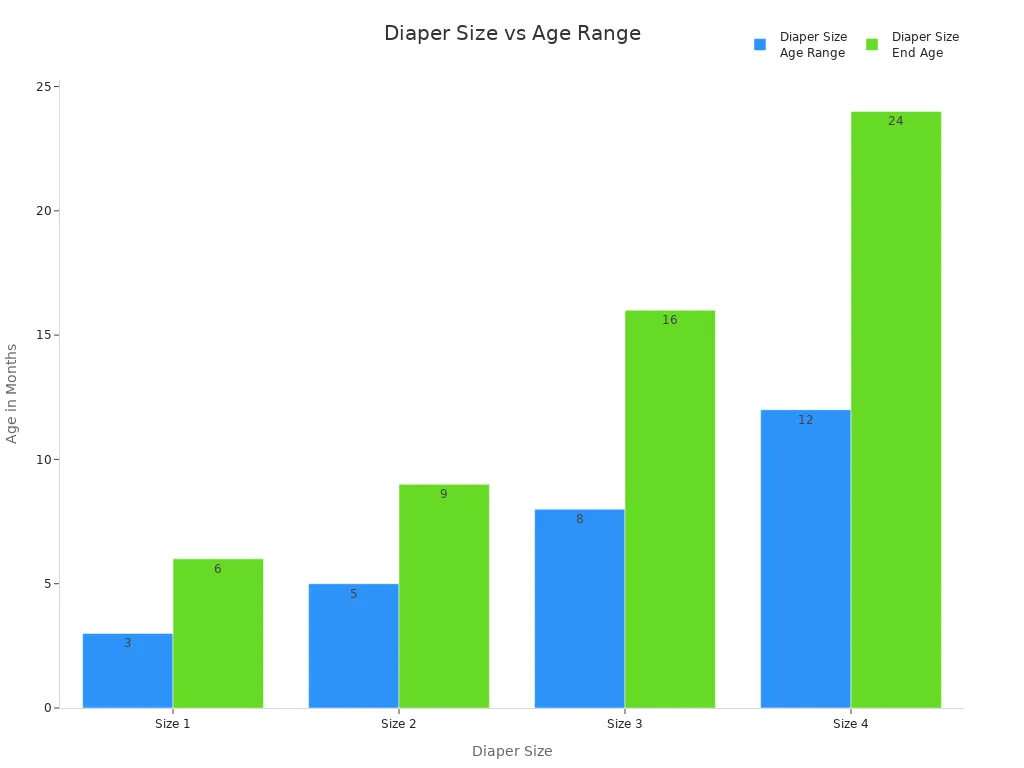
Babies grow at different rates, but most newborns gain 4-7 ounces each week during the first month. You may find yourself moving through diaper sizes quickly, especially in the early months. Size 1 diapers usually fit babies for about 3-6 months, but some babies outgrow them in just a few weeks.
Here is a helpful table to show typical diaper sizes, weight ranges, and age ranges:
Diaper Size
Typical Weight Range
Typical Age Range
Size 1
8-14 lbs
3-6 months
Size 2
12-18 lbs
5-9 months
Size 3
16-28 lbs
8-16 months
Size 4
22-37 lbs
12-24 months
You should weigh your baby every few weeks. If your baby's weight is close to the next size, or if you see leaks and red marks, it is time to move up. Changing to a bigger diaper helps prevent leaks and keeps your baby comfortable. You may need to try a few diapers in the new size to find the best fit.
Note: Every baby is unique. Some babies need to size up in diapers faster than others. Always watch for the signs and trust your instincts.
Knowing when to size up diapers helps you keep your baby happy and dry. You can use these tips and the diaper size chart to make the best choice for your growing baby.
How Many Diapers Per Size
Average Usage by Size
You may wonder how many diapers your baby will need as they grow. The number of diapers you use each day changes as your baby gets older. During the first year, you will notice that your baby goes through many diapers. This guide helps you plan for each stage.
Here is a quick look at how many diapers babies use by size:
Newborn: 8 diapers per day
Size 1: 7 diapers per day
Size 2: 6 diapers per day
Size 3: 6 diapers per day
Size 4: 6 diapers per day
Size 5: 5 diapers per day
Size 6: 5 diapers per day
Size 7: 4 diapers per day
You will see that newborns and young infants need more frequent diaper changes. Babies aged 2 to 4 months may use up to 10 diapers each day, which adds up to about 300 diapers per month. As your baby grows, the number of daily diaper changes slowly decreases. By the time your baby reaches 9 to 12 months, you may use about 7 diapers per day, or 210 per month.
The table below shows typical diaper sizes, weight ranges, and age groups. This can help you estimate how many diapers you might need for each stage:
Diaper Size Category
Typical Weight Range
Typical Age Range
Newborn
Up to 10 lbs
0-3 months
Size 1
8-14 lbs
3-6 months
Size 2
12-18 lbs
5-9 months
Size 3
16-28 lbs
8-16 months
Size 4
22-37 lbs
12-24 months
Size 5
27+ lbs
18+ months
Size 6 and Beyond
35+ lbs
2+ years
You can use this guide to plan your diaper purchases and avoid running out.
Stocking Up Tips
You want to make sure you always have enough diapers on hand. Babies grow fast, so you may need to change sizes sooner than you expect. Here are some tips to help you stock up wisely:
Buy small packs of newborn diapers at first. Your baby may outgrow this size quickly.
Watch your baby’s weight and growth. Move to the next size when you see leaks or red marks.
Keep a few packs of the next size ready. This helps you switch sizes without delay.
Track how many diapers you use each week. This makes it easier to plan your next purchase.
Store diapers in a cool, dry place to keep them fresh.
Tip: Always have extra diapers in your diaper bag and at home. You never know when you will need to change your baby, especially during outings.
You can use this guide to help you decide how many diapers to buy for each stage. Planning ahead saves you time and stress. Your baby will stay comfortable, and you will feel prepared for every diaper change.
Brand Differences: Chiaus and Others
Chiaus Diaper Size Chart by Weight
You want your baby’s diaper to fit well and feel comfy. Chiaus uses a size chart based on weight, just like Pampers and other big brands. Weight is the best way to pick the right diaper size for your baby. This helps stop leaks and keeps your baby’s skin safe. Chiaus sizes are similar to other brands, so you can use the same chart to find the best fit.
Chiaus diaper sizes use weight standards like other brands.
Weight-based sizing helps your baby get a good fit and stops leaks.
The Chiaus size chart helps you pick the right diaper for every stage.
Comparing Chiaus to Other Brands
You might wonder how Chiaus diapers compare to other brands for fit and absorbency. Chiaus diapers use special absorption technology and gentle materials. These features keep your baby dry and comfy. A good fit stops leaks and lets your baby move easily.
Chiaus has earned Dermatest Five-Star and EU Ecolabel certifications. These awards show Chiaus meets strict safety and quality rules. Chiaus diapers are safe and reliable because they follow EU REACH and U.S. FDA standards.
Here is a table showing the main differences in fit and absorbency between Chiaus and other brands:
Feature
Chiaus Diapers
Premium Diaper Brand (Example)
Absorption
High
High
Softness
High
High
Features
Wetness indicator, leak guards
Wetness indicator, leak guards, lotion-infused
Chiaus diapers have a 2mm ultra-thin core and a 5-layer absorbent core. Other Chinese diaper brands use a thicker core and fewer absorbency layers. This makes Chiaus diapers light and comfy for your baby.
Feature
Chiaus Diaper
Other Chinese Diaper Brands
Core Thickness
2mm ultra-thin
3mm+ standard core
Absorbency Layers
5-layer absorbent core
3-4 layers
Specialty Diapers (Overnight, Pull-Ups)
You may need special diapers for your baby, like overnight diapers or pull-ups. These diapers give extra protection and absorbency for longer times. Overnight diapers hold more and protect longer. Pull-ups are good for active babies and toddlers learning to use the toilet.
Feature
Standard Daytime Diaper
Premium Overnight Diaper
Absorbency Capacity
400-500ml
600-800ml+
Protection Duration
3-4 hours
10-12 hours
SAP Content per Diaper
4-6 grams
7-10+ grams
Leak Guard Height
Standard
Enhanced/Double
Waistband Coverage
Standard rise
High-rise back
Absorption Speed
3-5 seconds
Under 3 seconds
Weight guidelines on diaper packages are a general reference. Your baby’s body shape, thigh size, and waist size affect the fit. Sometimes, moving up a size gives better absorbency and coverage, stopping leaks.
You may want eco-friendly or hypoallergenic diapers for your baby. These diapers are popular in South Korea and Europe. Many parents pick diapers made from cotton and bamboo. These diapers avoid harmful chemicals and are safe for your baby.
Eco-friendly diapers are popular in Europe and South Korea.
Organic diapers use natural materials and avoid chemicals.
Germany leads with high-quality, safe, and eco-friendly products.
You can use this guide to help you pick the best specialty diaper for your baby’s needs.
Weight-Based Diapering Guide for Special Cases
Preemies and Low Birth Weight
If your baby arrives early or has a low birth weight, you may feel unsure about finding the right diaper. Standard newborn diapers may not fit well. Preemie diapers are smaller and designed for delicate skin. These diapers use soft materials and gentle fasteners. You want to keep your baby comfortable and avoid leaks.
A weight-based diapering guide helps you choose the best size. Weigh your baby often. Preemie diapers usually fit babies under 2.5 kg (about 5.5 lbs). Some brands offer micro-preemie sizes for babies under 1.5 kg. Always check the weight range on the diaper package. If your baby is between sizes, try both to see which fits better.
Note: Hospitals often use special diapers for preemies. When you go home, look for diapers labeled "Preemie" or "Micro-Preemie." These diapers protect your baby's skin and help prevent irritation.
You may need to change your baby's diaper more often. Preemies have sensitive skin and need extra care. Keep the diaper area clean and dry. If you notice redness or leaks, try a different size or brand.
Unique Baby Shapes
Every baby has a unique body shape. Some babies have chubby thighs, while others have a slim waist. Even if two babies weigh the same, they may need different diapers for a good fit. You want your baby's diaper to fit snugly without leaving red marks or gaps.
Diaper manufacturers understand that babies come in all shapes. They design diapers with different cuts and features. Here are some ways brands help you find the right fit:
Brands use weight as the main factor for sizing, but they also consider unique body shapes.
Each brand offers distinct cuts and designs to fit different babies.
Your baby's shape can affect the fit, so you may need to try a few brands to find the best diaper.
You can use a weight-based diapering guide as a starting point. If your baby's diaper leaks or leaves marks, try another brand or style. Some diapers have stretchy sides or extra leg cuffs. These features help the diaper fit better on babies with rounder thighs or slimmer waists.
Tip: Always check the fit after putting on a new diaper. Make sure there are no gaps at the legs or waist. Your baby should move easily and stay dry.
A good fit keeps your baby comfortable and helps prevent leaks. You may need to adjust as your baby grows or changes shape. Trust your instincts and use the guide to help you make the best choice.
Choosing the right diaper size for your baby makes a big difference. You help your baby stay comfortable and dry when you use a diaper size and weight chart. A good fit prevents leaks and keeps your baby’s skin healthy. You may need to adjust diaper sizes as your baby grows, which is normal.
Using a chart helps you pick the best diaper for your baby’s weight.
Checking the fit often keeps your baby happy and safe.
Many resources give you tips for finding the right diaper size.
You can trust Chiaus to provide quality diapers for every stage. Remember, every baby is unique. You do your best when you check your baby’s needs and adjust as they grow. You are doing a great job as a parent!
FAQ
How do diaper sizes work?
You match your baby's weight to the diaper's weight range. Diaper sizes work by using weight as the main guide. Always check the package for the correct weight range. This helps you find the best fit and keeps your baby comfortable.
How can I use a diaper size calculator?
You enter your baby's current weight into a diaper size calculator. The calculator shows the best diaper size based on the weight range. This tool helps you choose quickly and ensures your baby gets the right protection.
How do I know when to size up?
You should look for signs like leaks, red marks, or a diaper that feels tight. If your baby's weight is near the top of the weight range, it is time to size up. This change gives better protection and comfort.
Why does weight matter more than age for diaper sizes?
Weight gives a clear measurement for diaper fit. Babies of the same age can have different weights. Diaper sizes work best when you use weight, not age, as your main guide. This method helps you avoid leaks and discomfort.
How many newborn diapers will I need?
You will use about 8 to 12 newborn diapers each day. Most babies stay in this size for two to four weeks. Plan for at least 200 to 300 newborn diapers. Always check your baby's weight to know when to move to the next size.
What if my baby is between two weight ranges?
You should try both diaper sizes to see which fits better. Babies grow fast, so check their weight often. Choose the size that matches your baby's weight range and offers the best protection. Watch for leaks or red marks as signs to adjust.
Can I use the same diaper size for day and night?
You can use the same size if your baby's weight fits the weight range. For extra protection at night, try specialty overnight diapers. These offer more absorbency and keep your baby dry for longer periods.
Does my baby's shape affect the right diaper size?
Yes, your baby's shape can affect fit. Even with the same weight, some babies need a different size for better protection. Always check the weight range and watch for gaps or red marks. Adjust the size if needed for comfort and dryness.