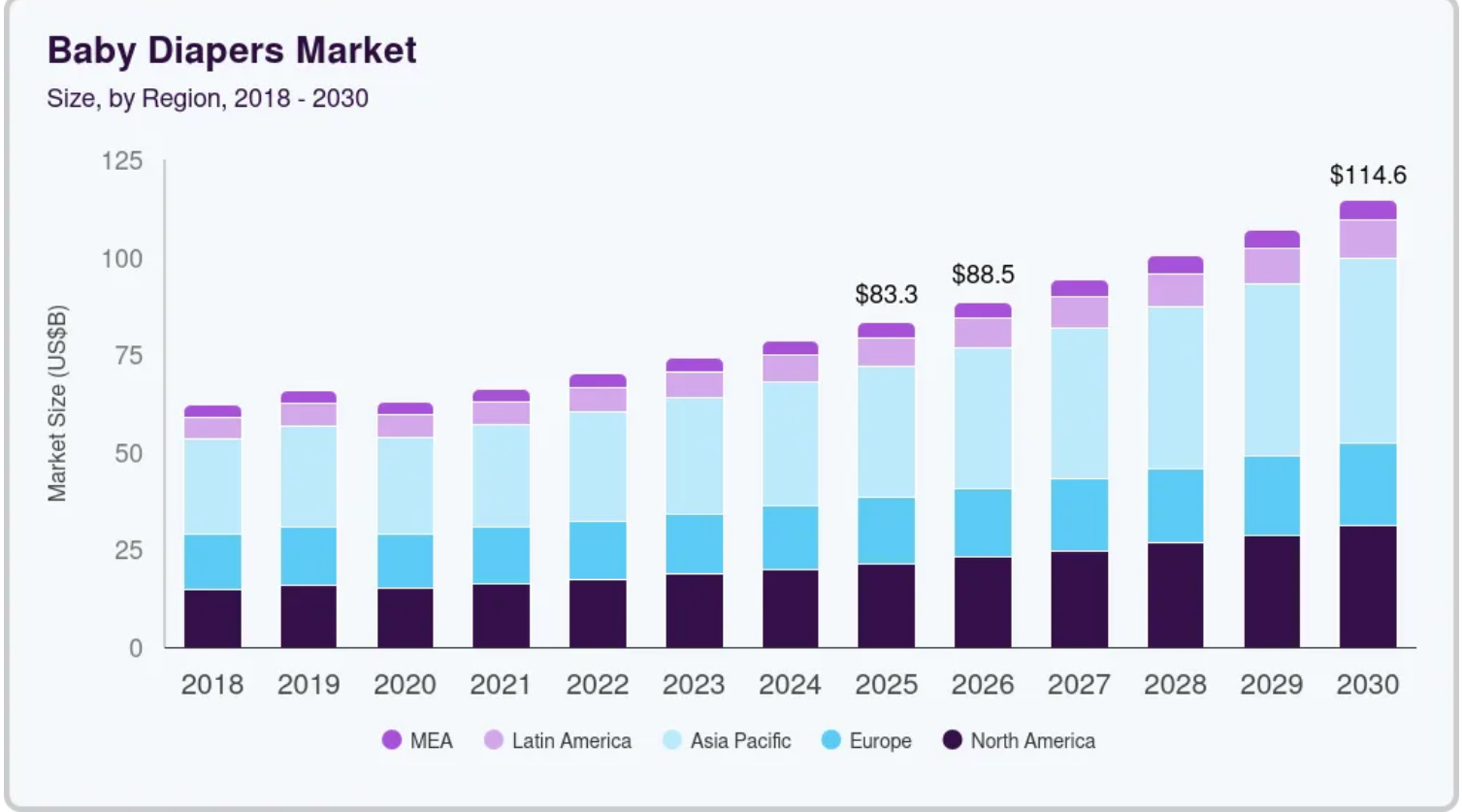
Amid the ongoing expansion of the global diaper market, precisely matching appropriate diaper sizes to target markets has become crucial for baby diaper manufacturers and B2B distributors to enhance their competitive edge. For overseas clients, failing to provide diaper sizes tailored to local infants' growth characteristics not only leads to consumer abandonment due to issues like leakage and discomfort but may also damage a brand's long-term reputation in the local market. The core criterion for selecting diaper sizes is not the traditionally perceived "age in months," but rather the baby's weight. This standard has gained global consensus across major markets. Yet, many industry players still overlook weight factors, resulting in issues like low product fit rates and inventory backlogs.
Why Weight Is the Core Standard for Selecting Diaper Sizes in Global Markets
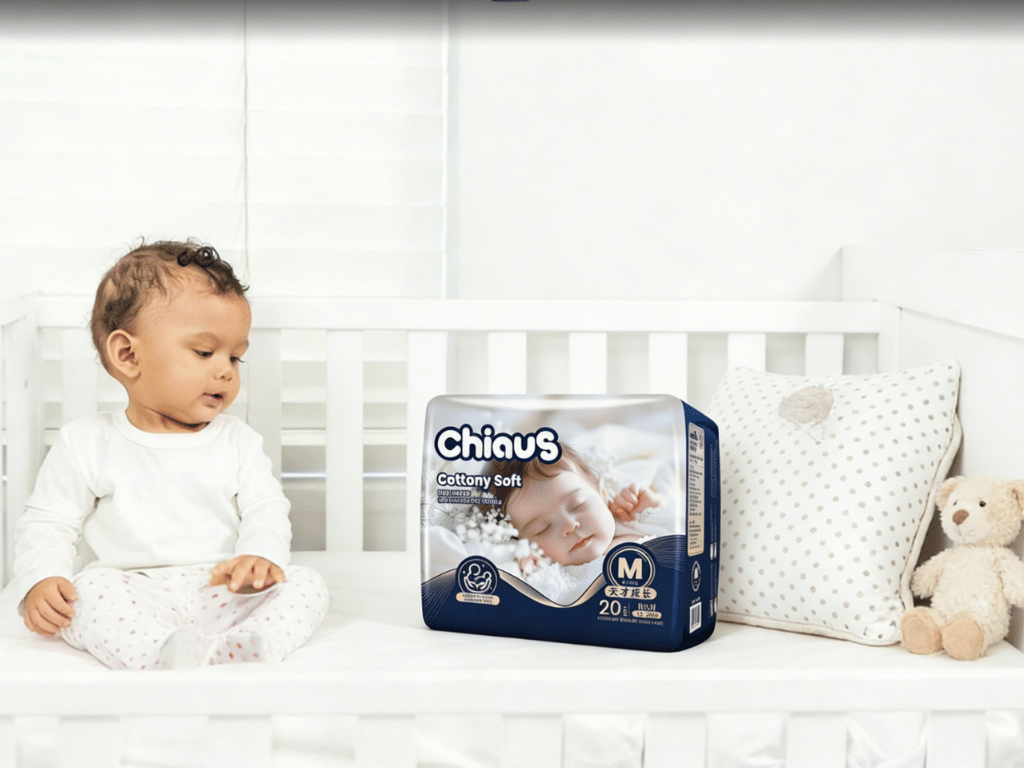
Before discussing the logic behind choosing diaper sizes, we must first acknowledge a crucial fact: babies grow at significantly different rates. Relying solely on age in months as the basis for determining diaper sizes can easily lead to poor fit. For example, among 3-month-old babies, some may weigh only 5 kilograms while others reach 8 kilograms. If suppliers rigidly adhere to the notion that "3 months old wears size S," the former may experience leaks due to oversized diapers, while the latter may suffer from skin irritation, redness, and marks from undersized diapers.
The internationally renowned baby diaper brand Pampers explicitly states in its official guide: Compared to age, a baby's weight is the most reliable indicator for selecting diaper sizes. Weight directly reflects the baby's actual need for diaper size, ensuring comfort and leak protection." . This perspective is widely recognized in the global diaper market for the following reasons:
Weight determines fit: Diaper sizes are designed around a baby's waist and leg circumference, which correlate strongly with weight. For example, an 8-kg baby typically has a leg circumference 2-3 cm wider than a 5-kg baby. Using the same diaper size would cause tightness for the heavier baby and leakage for the lighter one due to excessive space.
Avoiding Resource Waste: For B2B clients, stocking diaper sizes based on age may lead to some sizes becoming unsold (e.g., a sudden drop in demand for size S in markets with many chubby babies) while others become scarce (e.g., a surge in demand for size M). Stocking based on weight allows for more precise alignment with market demand, reducing inventory buildup.
Analysis of Weight Classification Standards for Diaper Sizes in Major Global Markets
While diaper size labeling systems vary across countries and regions, the principle of "weight-centric classification" remains consistent. For baby diaper manufacturers, understanding the weight classification standards of target markets is fundamental to ensuring precise supply and meeting local demand. Below are detailed weight classifications for diaper sizes in the world's four core diaper markets, provided for B2B clients' reference:
U.S. Market: Numerical labeling with emphasis on leak prevention
U.S. diaper sizes use a "number + letter " combination, commonly labeled as N (Newborn), Size 1, Size 2, Size 3, etc. Weight classifications are clear, and consumers prioritize absorbency and leak prevention in baby diapers (based on U.S. consumer feedback data). Specific weight ranges are as follows:
N Size (Newborn): Suitable for newborns weighing <5 lbs (approx. 2.3kg), primarily used for premature or low-birthweight infants, representing a relatively small demand share.
Size 1: Suitable for babies weighing 8-14 lbs (approx. 3.6-6.4kg), covering infants aged 1-3 months, one of the core demand sizes in the U.S. market.
Size 2: Suitable for babies weighing 12-18 lbs (approx. 5.4-8.2 kg), corresponding to 2-6 months. As urine output increases at this stage, baby diapers in this size emphasize enhanced absorbency.
Size 3: Suitable for babies weighing 16-28 lbs (approx. 7.3-12.7 kg), covering infants aged 6-12 months during the crawling stage. Diaper sizes must balance snug fit with ease of movement.
For supplying the U.S. market, prioritize production allocation for Sizes 1-3. Additionally, recommend our baby diapers featuring advanced leak-proof technology , whose dual-layer leak-proof side design aligns strongly with U.S. consumer preferences.
Japanese Market: Multi-dimensional considerations for more precise design
Japanese diaper sizes follow a similar labeling system to China (NB, S, M, L, LL), but beyond weight classifications, they additionally account for the baby's waist and hip measurements. This results in superior size compatibility, making Japanese baby diapers highly sought-after in international markets. Specific weight ranges are as follows:
NB Size: Designed for newborns weighing 0-5kg, featuring lighter materials specifically for premature infants to minimize skin irritation.
S Size: Suitable for babies weighing 4-8kg (1-3 months), with a looser waistband elastic to accommodate chubby babies of varying builds.
M Size: Suitable for babies weighing 6-11kg (4-6 months old, learning to roll over). The leg openings are tailored for a snug fit, preventing leaks during rolling movements.
L Size: Suitable for babies weighing 9-14kg (7-12 months old, learning to crawl). The material features enhanced breathability to reduce stuffiness during crawling.
The Japanese market demands high standards for baby diaper design details. Our Genius Champion baby pull up pants, launched specifically for this market, feature a 360° elastic waistband to accommodate various hip sizes of toddlers. This product has secured long-term orders from multiple Japanese distributors.
European Market: Environmental Priorities and Broad Size Coverage
European diaper sizes are labeled numerically (Size 1, Size 2, Size 3, etc.), characterized by wider weight ranges per size and strict requirements for eco-friendly materials and comfort in baby diapers (per European baby product standard EN 14685). Specific weight ranges are as follows:
Size 1: Suitable for newborns weighing 2-5kg, emphasizing biodegradable materials to align with European environmental policies.
Size 2: Designed for babies weighing 4-8kg (1-4 months), featuring enhanced breathability to reduce skin irritation risks.
Size 3: Suitable for babies weighing 7-18kg (5-18 months), serving as the "universal size" for the European market. Due to significant variations in infant growth rates, this size requires enhanced elasticity for superior adaptability.
The European diaper market has significant eco-friendly demands. Our baby diapers for this market are all certified under OEKO-TEX® Standard 100, directly meeting European B2B clients' environmental procurement standards. Paired with our baby wipes , they form a "diaper + cleaning" combo pack, enhancing product competitiveness.
Practical Strategies for B2B Clients to Expand Markets Using Diaper Size Guidelines
For B2B clients, understanding the weight-based classification standards for diaper sizes is merely the foundation. The true key to boosting sales performance lies in translating these standards into concrete market expansion actions. The following three practical strategies will help clients precisely match target market demands for diaper sizes while enhancing competitiveness through our company's products:
Diaper Size Stocking Recommendations Based on Market Demand
Infant weight distributions vary across markets. For example, average infant weight in the U.S. market is slightly higher than in Southeast Asia, while Japan has a lower proportion of "chubby babies." Therefore, adjust diaper size ratios accordingly when stocking:
Newborn Size (NB): Stock cautiously: In most global markets, NB size is used for only 1-4 weeks (or as little as 10 days for larger babies). Excessive stocking risks inventory buildup. B2B clients should align NB allocation with target market newborn weight distributions, limiting it to 5%-8% of total order volume. For instance: - U.S. market: Slightly reduce to 5% (due to higher proportion of larger babies) - Southeast Asian market: Increase to 8% (where low-birth-weight infants are slightly more common).
Core Sizes (S, M, L): Prioritize Stocking: These three sizes cover infants from birth to 12 months and constitute the primary demand in the global diaper market. Combined stock allocation should reach 70%-75%. Specifically, the US market may prioritize Size 1 (corresponding to S) and Size 2 (corresponding to M), while the European market may emphasize Size 3 (covering L demand).
Large sizes (XL, XXL): Adjust based on demand: Diaper size requirements for toddlers correlate with local potty training practices. For example, European babies begin potty training earlier, resulting in approximately 15% demand for XL sizes. while Southeast Asian babies are potty trained later, where XXL demand can reach 20%.
Methods for guiding downstream customers to assess diaper size suitability
B2B customers' downstream channels (e.g., retailers, maternity stores) interact directly with consumers. Helping them master diaper size assessment methods can significantly boost consumer satisfaction and repurchase rates. The following four simple criteria can be recommended to downstream customers:
Two-Finger Rule: After diaper application, if two fingers fit vertically at the waist and one finger fits horizontally at the leg openings, the size is appropriate. If insertion is difficult or the baby kicks and cries, switch to a larger size.
Chafing Indicators: If noticeable red marks appear on the inner thighs or waist, try a larger size even if the baby's weight is within the current size's upper limit. This is a common sizing issue for chubby babies.
Leak Frequency: If the diaper is worn correctly (with the leak guards tucked in) but leaks frequently (e.g., wetting the bed at night), the current size may lack sufficient absorbency or fit. Switch to a larger size.
Weight Exceeding Limit: When your baby's weight exceeds the upper limit for the current diaper size, switch to a larger size immediately. Avoid tight diapers that restrict blood circulation or loose ones that cause leaks.

Conclusion
In the increasingly competitive global diaper market, precise sizing has become a "core competitive advantage" for baby diaper manufacturers and B2B clients. Whether addressing the numerical sizing of the US market, the meticulous designs of the Japanese market, or the eco-conscious demands of the European market, the principle of "selecting diaper sizes based on weight" remains constant. This approach not only helps clients reduce inventory waste and enhance consumer satisfaction but also provides a clear product strategy direction for expanding into new markets.
As a professional baby diaper manufacturer, our company consistently prioritizes global market demands, offering a full range of diaper products from size NB to XXL. We also provide complementary products like baby pull-up pants and baby wipes to meet the diverse needs of B2B clients across different countries and regions. For customized diaper size solutions tailored to specific markets or to view product details, visit our official website to contact our sales manager for dedicated support.
Looking ahead, as the global diaper market continues to expand, the adaptability of diaper sizes will become increasingly critical. We firmly believe that prioritizing weight-based sizing and market-driven strategies will enable us to maintain a competitive edge in the diaper market and achieve long-term mutual success with our B2B clients.


