The global B2B diapers wholesale market is undergoing profound transformation. Take the United Arab Emirates as an example: its local market is growing at an annual rate exceeding 15%, while import volumes in countries like Chile and Saudi Arabia are also surging significantly due to demographic dividends from young populations.
For wholesalers, brands, and major retailers, partnering with China—the "world's factory"—is no longer an optional choice but a strategic decision. When sourcing diapers wholesale, you're not just selecting products; you're choosing a business model.
Diapers Wholesale Market Landscape and Model Evolution
The global diaper trade is expanding at an unprecedented pace. Order volumes in the European market surged over 45% year-on-year, with France posting a remarkable 125% growth rate, while Spain and Italy both exceeded 50% growth.This expansion extends beyond traditional markets, with Latin America delivering equally impressive performance: Argentina doubled its order volume, and Chile grew by 70%.
As a major trading partner for over 150 countries and regions worldwide, China's supply chain advantages are unlocking significant potential in emerging markets. Fast-moving consumer goods like diapers, due to their high-frequency procurement nature, have become key inquiry categories for overseas B2B buyers.
Diversified business models have given rise to three mainstream collaboration approaches: OEM, ODM, and private label. Each model aligns with distinct market demands and commercial strategies.
For buyers, understanding the fundamental differences between these models enables more precise market positioning, cost and risk control, and maximized commercial returns.
Core Analysis of Three Major Models: Definitions and Applicable Scenarios
1. OEM
The OEM cooperation model, or "Original Equipment Manufacturing," refers to the buyer providing complete product designs and specifications, with the manufacturer strictly producing according to these requirements. This model suits enterprises possessing robust R&D capabilities and a clear product vision.
Choosing OEM means you retain full control over the product's intellectual property and unique selling points. However, it also entails higher initial costs, longer development cycles, and larger minimum order quantities. Typical OEM project development cycles range from 3 to 6 months, with minimum order quantities usually set at 100,000 pieces per size.
Take Chinese manufacturer Chiaus as an example: with over 100,000 square meters of self-built factory space, 15 advanced production lines, cutting-edge equipment, and a seasoned R&D team, it achieves an annual output of 100 million diapers.
2. ODM
The ODM (Original Design Manufacturing) model involves manufacturers providing existing product designs and solutions, while buyers primarily customize branding elements (e.g., colors, packaging, logos). This approach excels in rapid time-to-market and low development costs.
The ODM model is highly suitable for startups, e-commerce brands, and businesses seeking to rapidly test market response. Development timelines can be shortened to weeks, with relatively low minimum order quantities typically ranging from 100 to 500 units.
However, the ODM model's limitation lies in its constrained product uniqueness. Similar designs may appear in the market, leading to homogenized competition.
3. Private Label
The private label model involves a buyer commissioning a manufacturer to produce goods, but marketing and selling them entirely under the buyer's own brand. This model can be based on either OEM or ODM collaboration.
Establishing a private label requires significant resource investment from the company, including brand building, channel development, and marketing promotion. For businesses seeking to transition from pure trading to brand operations, this represents a long-term strategic choice.
Model Selection Decision Guide: Four-Dimensional Evaluation Method
Faced with three cooperation models, how can you make an informed choice? A systematic assessment across the following four dimensions will provide you with a clear decision-making path.
Evaluate Innovation Needs and Intellectual Property. If your product features unique designs, patented technologies, or specialized functions, the OEM model is the optimal choice for protecting intellectual property. In the diaper sector, this could encompass a distinctive absorbent core structure, innovative leak-proof designs, or specialized skin-friendly materials.
For instance, some manufacturers have pioneered industry-first innovations like the "in-line core" process and the "bubble waistband" design patent. If you aim to develop products based on such technologies, you must select an OEM partner capable of strictly executing your design specifications.
Take the diaper industry as an example: basic absorption, dryness, and breathability have become industry standards. These products typically adhere to national benchmarks like the mandatory GB 15979-2002 "Hygienic Standards for Disposable Sanitary Products" and the product implementation standard GB/T 28004.1-2021.
ODM products designed based on these standards can significantly shorten development cycles.
Analyze market demand and differentiation opportunities. In regions where the diaper market is saturated, product differentiation is key to standing out. The OEM model enables you to customize products for specific consumer groups, such as sensitive skin-friendly series or lightweight, breathable diapers tailored for different seasons.
In emerging or price-sensitive markets, cost-effective ODM products may hold greater competitive advantage. Crucially, select a product model aligned with local consumer demands and purchasing power.
Define long-term strategy and resource allocation. Building enduring brand value necessitates investing in proprietary brands—a path requiring sustained resource commitment, including market education, brand development, and consumer trust cultivation.
For companies seeking to transition from trading to branding, the ODM model offers a rapid initial market entry. Once sufficient market recognition and resources are accumulated, shifting to OEM to develop exclusive products and ultimately establish a proprietary brand ecosystem becomes feasible.

How to Choose the Suitable Diapers Wholesale Supplier?
After determining the cooperation model, selecting the right diapers wholesale supplier is a critical step toward success. An excellent manufacturer not only provides high-quality products but also becomes your reliable business partner.
Verify production capacity and quality standards.
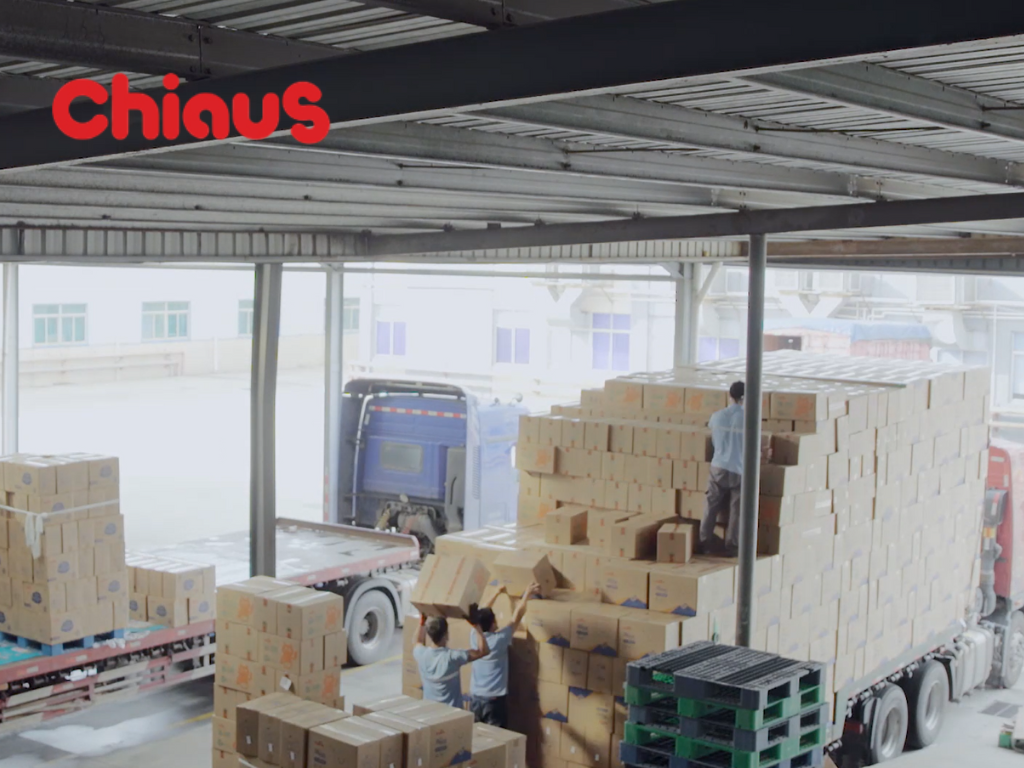
A professional diapers manufacturer should possess modern production facilities and a rigorous quality control system. For example, industry-leading enterprises may feature Class 300,000 clean production workshops, high-standard Class 10,000 R&D microbiology laboratories, and 22 sets of modern, fully servo-driven high-end production equipment. These facilities ensure production environment cleanliness and product consistency. As disposable hygiene products, diapers demand stringent sanitary standards. Chiaus has compiled relevant materials on rigorous international procurement certification standards. During procurement, verify whether suppliers strictly adhere to these standards.
Evaluate R&D and Innovation Capabilities.
In the fiercely competitive diaper market, continuous innovation is key to maintaining a competitive edge. Excellent suppliers should possess professional R&D teams and innovative technologies. Since 2006, Chiaus has consistently adapted to market changes, developing products that meet market demands—such as diapers with added skin-protecting essences, eco-friendly raw materials, and extra-large 6XL pull-up pants.
Evaluate flexibility and service support.
B2B partnerships often require long-term trust building. From inquiry to contract signing, typical cycles may span several months, involving processes like sample confirmation and payment term negotiations. Once established, such orders typically exhibit continuity and stability. Seek suppliers willing to offer flexible cooperation terms that adapt to your business development needs. This may include providing small trial orders, assisting with product compliance certifications, or supporting marketing campaigns.
Collaborative Risk Management and Best Practices
Regardless of the partnership model chosen, risk management remains a critical component for ensuring long-term success. Below are practical recommendations for safeguarding your interests in wholesale diaper procurement.
Clearly Define and Protect Intellectual Property.
Within the collaboration agreement, it is essential to clearly delineate ownership of designs, technical patents, and brand rights.
For OEM collaborations, ensure contracts explicitly state ownership of intellectual property for designs and specifications you provide. For ODM partnerships, understand usage rights and exclusivity clauses regarding the manufacturer's existing designs. Consider consulting an intellectual property attorney, registering key trademarks, and signing stringent non-disclosure agreements.
As diapers directly contact infants' delicate skin, product quality and safety are non-negotiable. Beyond verifying suppliers' production certifications, request product samples for rigorous testing.
This includes basic "look, smell, touch, and check" methods: inspect product color for normality, smell for unusual odors, touch for softness without shedding, and verify individual packaging integrity.
Simultaneously, ensure products comply with target market regulations, which may include varying safety standards, labeling requirements, and environmental mandates.
Supply Chain Stability Assessment.
As a fast-moving consumer good, diaper supply chain stability directly impacts market availability and customer satisfaction. Evaluate suppliers' raw material sourcing, production capacity reserves, and logistics distribution systems.
Determine if they have contingency plans for unexpected events (e.g., raw material shortages, production disruptions, or logistics delays). Long-term suppliers typically offer more stable supply and prioritized production scheduling.
Establish transparent and efficient communication mechanisms.
Cultural differences and language barriers are common challenges in international trade. Create clear communication channels and regular update systems to ensure mutual understanding of product specifications, production progress, and quality standards.

Summary
Choosing a partnership model is essentially choosing the DNA of your company's future development. The decisions you make today with diapers wholesale supplier are quietly shaping the landscape of tomorrow's maternal and infant market. For more details, please contact Chiaus' sales team!


